

Dynamo: A century of light and movement in art, 1913-2013
April 10 – July 22 2013
Grand Palais
We had the pleasure of previewing the Grand Palais’ sensational new exhibition, Dynamo! And it was a pleasant surprise. A playful exhibition, arousing the visitor’s curiosity to the point of forgetting time. Optical illusions and trompe l’oeil never cease to impress.
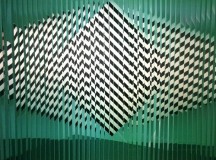
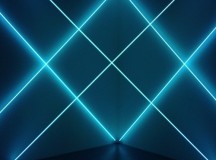
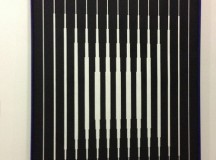
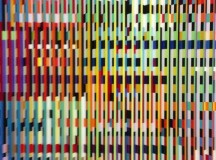
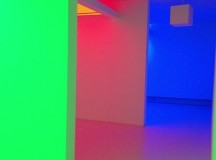
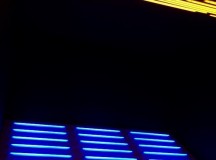
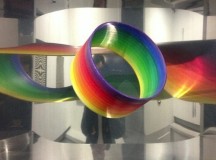
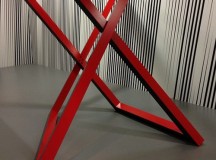
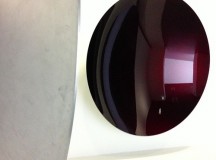
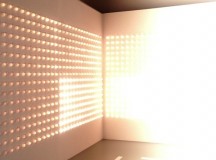
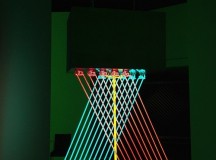
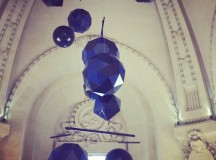
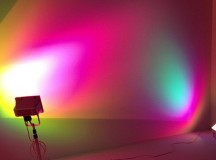
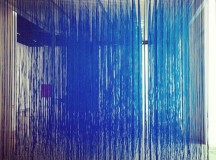
Notions of space, vision, movement and light run through twentieth-century abstract art, and concern many world-renowned contemporary artists, including Ann Veronica Janssens, Anish Kapoor, John Armleder, Carsten Höller, Philippe Decrauzat, Jeppe Hein, Felice Varini and Xavier Veilhan. By placing vibration and the viewer’s perception at the heart of their work, they offer multiple resonances with optical and kinetic art, a current inaugurated with the exhibition Le Mouvement at Galerie Denise René in Paris in 1955, but also, more broadly, with what was later described as “perceptual art” with the exhibition The Responsive Eye at the Museum of Modern Art in New York in 1965.
In an unprecedented move, the exhibition occupies the entire Galeries nationales du Grand Palais, some 3,700 m2, to showcase some 150 artists, sometimes working in groups, who have contributed to the development of this art form over the last hundred years. These include Julio Le Parc, François Morellet, Gianni Colombo, Jesús Rafael Soto, Dan Flavin, Hans Haacke, James Turrell, Yayoi Kusama, Victor Vasarely, Kenneth Noland, Jean Tinguely, Yaacov Agam, Tony Conrad, Pol Bury, Alexander Calder, Marcel Duchamp, Gerhard von Graevenitz, Christian Megert, Nicolas Schöffer, Bridget Riley, Dan Graham, Takis, Gregorio Vardanega, as well as artists’ collectives such as GRAV (groupe de recherche d’art visuel), and Groupe Zero.
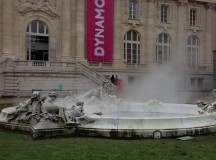
Visitors are greeted by a fog sculpture by Fujiko Nakaya in Jean Perrin Square. After an introduction focusing on the most recent creations, the exhibition then favors a dialogue between the different periods, to reflect both the continuity and the complex weave of these preoccupations. Two main parts, entitled “vision” and “space”, are subdivided into sixteen sections devoted to different themes linked to phenomenal experience: immateriality, monochromy, interference, immersion, flickering, clouds, instability, distortion, emptiness, invisibility and permutation, where a number of rare or previously unseen works will be shown in relation to each other, as well as numerous installations and environments, including GRAV’s Labyrinthe, created in 1963 for the Paris Biennale.
The last part of the exhibition, devoted to the earliest period, brings together the precursors of this trend: Giacomo Balla, Robert Delaunay, František Kupka, Marcel Duchamp, Hans Richter, Alexander Calder, Alexander Rodtchenko and László Moholy-Nagy, who were the first to translate a profoundly abstract, dynamic and immaterial conception of reality into their paintings, sculptures and films.
……………………….
general curator: Serge Lemoine
curator: Matthieu Poirier
associate curators: Domitille d’Orgeval and Marianne Le Pommeré
scenography: Véronique Dollfus
To coincide with the exhibition DYNAMO, Un siècle de lumière et de mouvement dans l’art, 1913-2013, and for the first time ever, the Réunion des musées nationaux-Grand Palais, in partnership with Orange, is offering visitors a free iOS and Android smartphone application, inviting them to take part in an innovative and original digital experience.
Consistent with the artists’ approach of inviting visitors to play an active part in their creations, this application offers an enriched, participatory visit to a selection of key works in the exhibition.
principle of the application
Visitors download the application from the Google Play Store, the App Store or directly from the Grand Palais by WI-FI, by flashing the QR code (Quick Response code) or by approaching the NFC (Near Field Communication) tag in the Square Jean Perrin. The visitor is then informed of the works selected for the application in the tour itinerary.
Within the exhibition, these works are indicated by a special label equipped with a code and an NFC tag. Visitors then enter this code into the application, or bring their smartphone close to the tag, and associate their contributions (photos and comments) with the chosen work, memorizing them, posting them on the wall of images at the end of the exhibition, on the www.grandpalais.fr website and sharing them on social networks.
Visitors keep a souvenir of their visit by storing their photos and comments in the app, and can also view other visitors’ contributions on their smartphone, on the image wall and on the web for the duration of the exhibition.
This application contributes to an original collective experience and to the construction of a vision and memory of the exhibition, which lends itself particularly well to this type of device, bringing together all the different points of view on the works that visitors may have.
opening : daily (except Tuesdays) from 10am to 8pm, and nocturne until 10pm on Wednesdays.
On July 14th, the exhibition will be open from 2pm to 8pm. Early closing at 6pm on June 30.
Closed on May 1.
rates: €13, TR €9 (16-25 years, large families)
New: free for under-16s.
Free for jobseekers under the “La Macif, la Culture pour tous” scheme, and for RSA and minimum old-age pension recipients.
access: metro lines 1 and 13 “Champs-Elysées-Clemenceau” or 9 “Franklin D. Roosevelt”
information and bookings: www.grandpalais.fr
Cette publication est également disponible en :

