

A black voice
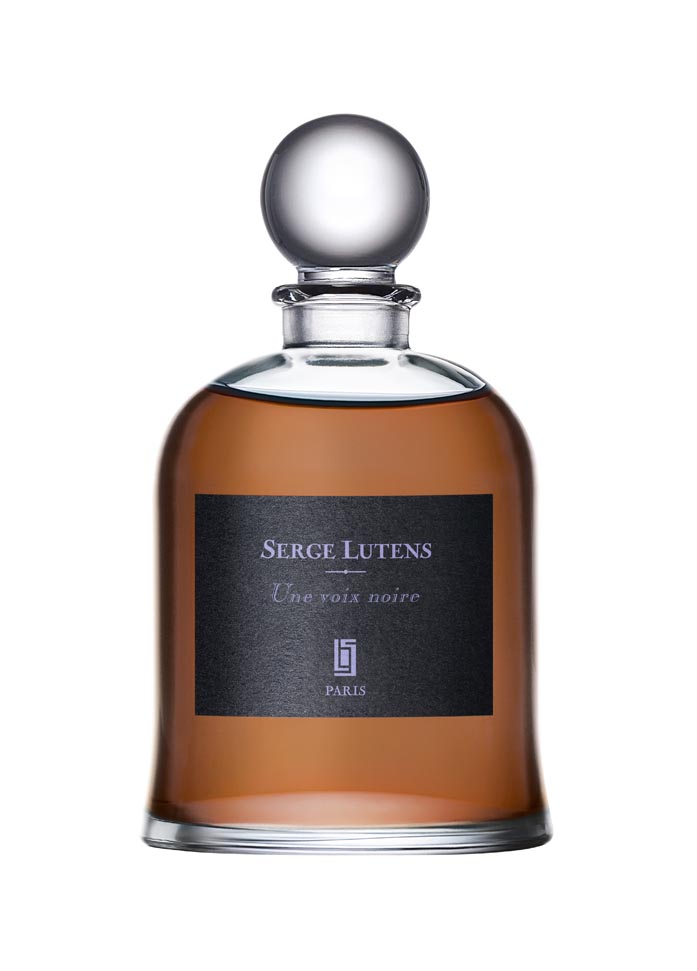
It wasn’t for the sake of time that Billie wore a watch. Its circumference and weight were enough to show that the wrist she wore was not hers. True or false gold – what does it matter! – it was a man’s watch. In essence, I grant the power of transference and, in time, perhaps, metamorphosis, to objects that are not where they should originally have been. You are possessed. A color, a gesture, a hairstyle mark the affiliation. I know all about that. Through them, high above or low to the ground, you are carried. You no longer belong to yourself.
Billie’s father, Clarence, was 17. He played the banjo. The mother, Sadie, a few years older. Of men, she liked marriage and security. Neither of them recognized each other. Billie remained alone, entrusted to whomever she could. When Clarence would drop in on her between rounds, he’d tell her, despite the fading lace of her dress, that she was a tomboy. He called her “my little Bill”. Her real name, then, was Eleonora. You will honor your father and your mother. You’ll learn all that from biographies. That’s not my point. If I tell you about Billie, it’s probably a roundabout way of telling you about myself. I” is difficult for me. Don’t get me wrong, I’m not with Billie, I’m in Billie. As soon as her voice rose over a velvet drama, my heels turned up. The twill drape of a straight skirt impeded my gait. The same suit squared my shoulders. Without Job paper and no more tobacco, I held my cigarette high. For the duration of a My Man, I’d become Billie or a chic customer going through her song. As soon as the needle left the wax, my shoulder pads, like champagne foam, slumped to shoulder level. My feet were just themselves, flat on the men’s floor. The magic was gone. The coach became what it should never have become: a pumpkin. But I was contaminated. I followed my path, and to better find myself in it, I wrote it down.
When, from sleep, she drew aside the curtains, the day was tinged with night. Billie was sticking to her routine. Long friends, they were becoming her enemies. Even so, unable to find replacements for them, she depended on them. First one pill, then two, then… she fell asleep in the certainty of oblivion. The ones she swallowed to come out of it woke up a sleepwalker on the verge of panic. Coffee played the role of a hyphen. Sip by sip, all around her, was reality so real it seemed dreamlike. Slowly, the absorbent, fluffy material of waking, like that of blotting paper, came to the surface: the fall of a button hanging by a thread, the red of chipped varnish showing the white of fingernails. Finally, a host of little things that, without really bringing her to life, brought her back to it.
A bath and a brief stroll in front of the mirror – she barely took the time to repaint herself – helped her pull herself together. She slipped on whatever she had on, ran down the stairs and, without really knowing what she was doing there, found herself in the street. New York was sweltering in summer. Above her, like a cocktail, the glass of the skyscrapers filled with light. Evening was moving faster than she was. It was the hour, between dog and wolf, when everyone merges. Her path led her to Covan’s, the club where she sang. Is it possible that, by dint of indifference, the neighborhood that had passed through so much and so often had taken offense and, in order to make it known, had led Billie into the half-light? The high-slung streetlamps cast shadows and, at wide intervals, abandoned them to the darkness. Through one of them, Billie guessed she was being approached. She quickened her pace. Certainty won her over: she was being followed. Beginning in the belly, in the bluest part of her bowels, the fear that had started in her legs branched out into her whole body. Now she was following so closely that Billie could hear the clatter of her heels echoing in the soles of whoever was following her. Silence had irons. Ready to flee, her foot shod with speed. She felt the trigger spring tense on departure. Then she stopped. The street was bare. The rumor mill waited for an order from the silence.
Billie came to. To make it happen, she took a compact out of her purse, opened it, and in the most unnatural way, with the powder puff, powdered herself. A lover made herself beautiful. Only forgers recognize the real thing. When the false semblance had reached its peak, pretending to judge the effect, she moved the case away and turned the mirror from right to left in all directions. Bringing the mirror towards her, she saw nothing but the late Billie. Giving her volte the flight of a ball gown, she faced the danger that didn’t exist. She matched the cadence of her thoughts to her gait. Half aloud, she asked herself questions, half answering them. She couldn’t be dreaming! In a single breath, she confessed the unmentionable to herself: “I’m afraid of my shadow.”
Childhood is never far away. Billie brought herself back to it.
A ghost is white, but a slave’s is black, isn’t it? What she had never forgotten, she suddenly remembered. The eye was that of her grandmother, Rebecca, whose grave she still carried on her back. Billie was only a child at the time, but her ancestor was 96 years old. She lived and slept in a chrome armchair, never having to leave it at any cost except that of her life, and yet… That day, she begged the child to help her regain her wish: to rest lying on the bed. As soon as she had granted her wish, Billie joined her and, in the warmth of her good deed, embraced her body. In this surrender, both were soothed to sleep. When Billie awoke, she was alone. Rebecca’s loving arm had closed around her neck. Caught desperately on the bone of this padlock, Billie tried to make the present gesture return to the previous one. She begged the corpse. It remained cold. The skeleton held the memory of her last will. She cursed the corpse: “Leave me alone, get the hell out, you disgust me.”
Nothing worked. The dead woman wouldn’t let go. Billie screamed. They came to rescue her. They beat her. She thought she deserved it.
Letting the memory fade, Billie stuck a cigarette between her lips, lit it, took a long puff, and in a language known only to smoke, let go of Rebecca. Machinically, she hailed a cab and, like a fox’s fur in a burrow, plunged in.
✳ ✳ ✳
– Hi Billie!
It was the doorman, dressed in blue and trimmed in gold. He took off his cap.
– Hi John!
She was dragging her voice.
– Doesn’t it look okay?
– You can say that again, Commie, and even less than you think!
She entered the box. A condemned man was leaving his trial. The basement plunged the box into darkness. Groping her way with the flat of her hand, she skimmed along the wall to the light switch, which she flipped up with a quick flick of her index finger.
Mimi, a 15-year-old girl, lay sleeping like a bee on the pillow her arms crossed. Leaning on the table, in front of the lined-up combs and brushes, she awoke. The two beautiful white beads in her eyes lit up. She lived only for Billie.
At the top of her head, three small braids stood out. Each of them, in the satin of a bright pink bow, completed the surprise. She called them “My kikis”. A chick was emerging from the egg. Like a serin when its cage is revealed, Mimi was catching up on her lost song. She spoke so fast we couldn’t understand a word!
Billie caught herself between the eyes, got as close to her as possible and in her face, sent herself, “I’m awful,” but just before the ice closed on that sentence, she pulled away. You’re broken if you don’t.
In this way, she would ward off fate, hammer a nail into the wood of an idol, thwart the spirits’ plans and prevent them from getting their hands on her. Let’s not forget that Billie’s roots were in Africa. Only there did apparition allow disappearance. Only by summoning the hideous could she chase it away.
A swig of rum did the rest. She acted.
Her make-up had the power of a mask. It transfigured her. Billie gave her hair the same power that we delegate to witches and fairies. Her hair’s success depended on its mood. She had to coax them. By dint of dyeing and straightening, the hair no longer retained even the idea of having been so named. The teeth of the comb raked the long strands, which Billie skilfully, one by one, pulled up to the top of the edifice and, around a pin-twisted hollow, pulled back.
The last quarter of the ogive was curling. Mimi had placed the straightening iron on the blue flame of a small stove. When it was hot, she handed the handle to Billie, who kept the latter’s visored length wedged between her middle finger and index finger. Crazy Mimi! It was burning hot. Suddenly, Billie was at the heart of the disaster. The instrument in its beak held the burning wool in a smile – perhaps you’ll be surprised that a hairdresser’s tool would dare to smile, but in the same way that long-beaked birds and especially pelicans laugh at us, curling irons are not only gifted at playing tricks on us, but also at amusing those who fall victim to them.
Hell isn’t that far away. He smelled like hell. Emerging from the flames, Billie said to the devil:
– Silly girl! Look at you, you’re such an idiot!…
Mimi squealed.
– But don’t just stand there! There’s a girl at the box who sells flowers.
Go get it…
Mimi left. A draught slammed the door. As best she could, Billie finished assembling the cathedral. With her fingers, she occupied the impatience, imagining petals opening into corollas or buds, closing at will. On the site of the burn, with her hand inverted, she placed her flowers of flesh.
Mimi returned and, as if the result of a conjuring trick, presented :
– Oh, Lucy! …Look Billie, we’re saved, it’s all here!
In fact, a young girl in pumps was perched on her heels, her legs squared off in black fishnet. She was dressed in a similarly colored short jersey. A wide ribbon across the nape of her neck held up a waist-high basket of white gardenias on blond wicker. Lucy offered them. With the feverishness of a soldier’s fiancée in front of the letter carrier, Billie turned her head and cautiously picked up a shaft of snow, which she raised to the point called “the burned”. This immaculate bandage, this half-wreath of mourning, this crescent moon, gave Billie back her flowery smile.
Mimi helped her slip on and button up the dress hanging on a hanger behind her. A one-piece, neck-to-shoulder brocaded yoke unfurled a thick white relief, which the floral plume did not disavow. Buoyed by confidence, Billie left the dressing room and made her way to the top of the jazz floor. On the verge of tears, she led her audience. I won’t say anything about her voice. Who better to talk about her than her songs?
Cette publication est également disponible en :

