

Interview with Serge J. GHNASSIA, President of MILADY

Serge Ghnassia comes from a line of furriers. In 1933, his grandparents opened and operated several stores in Paris. They sold furs under the MILADY name. In the 1970s, his parents acquired a fine location, at no. 120 on the world’s most prestigious avenue, the Champs-Elysées.
Raised on furs like others on the alchemy of fine wines, or the esotericism of fine watchmaking, Serge GHNASSIA began his furrier’s apprenticeship at the age of 14. Behind the scenes in the store, he immersed himself in the enriching initiation of MILADY’s “Chambre Maître”. Gifted with a certain talent, he quickly learned the rudiments of assorting skins and elongated mink work. But it was above all creation, design and cutting that fascinated him. With his good pencil skills, he quickly drew his first patterns and made his first original models. Serge GHNASSIA knows what he doesn’t want to be: an anonymous fur coat salesman. A productive designer, he will soon have a brand to wear and develop: MILADY. Finally, a concept to realize: Haute Fourrure.
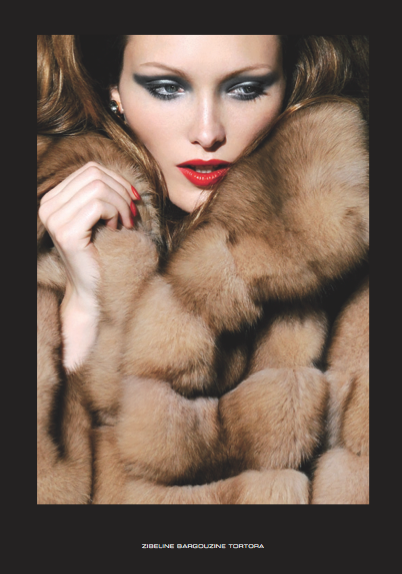
Milady was founded in 1933. Where does it come from?
Milady was born of the will of a man who was my grandfather and who always adored the fur material. He first made clothes for others before starting to sell them on his own account.
You’re the heir to a tradition that goes back almost a hundred years. How is this heritage evolving?
You don’t inherit tradition, but you’re born into a world where you grow up with skins, thread, sewing machines, smells and terms, which is quite different because you learn in spite of yourself all the minute details, from choosing skins to working with elongation, cutting and everything else you need to know to make a piece of fur.
The evolution is almost self-evident, because once you’ve mastered the basics, it’s much easier to evolve your creation, to seek out ideas, to sniff out the zeitgeist and adapt your vision to the knowledge you have, particularly in the field of fur.
What is the furrier’s trade in 2011? Has it changed?
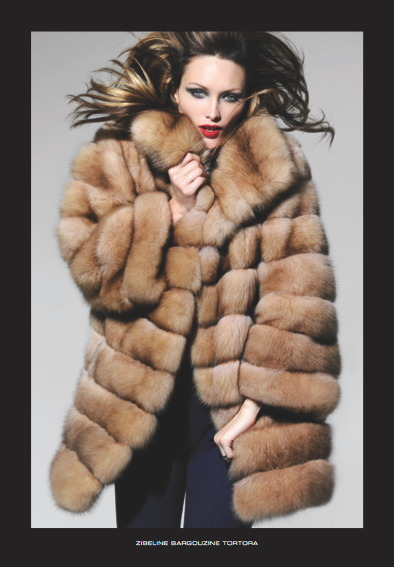
The furrier’s profession in 2011 is above all a creative one. Milady, now a benchmark for prestige furs, never stops creating and seeking new inspiration. This includes the choice of skins: mink, astrakhan, sable and chinchilla. Nothing escapes the drastic controls required before the final selection. In this sense, the trade has not changed, since the know-how involved in selecting and assembling skins has remained the same. On the other hand, working with skins today is quite different, since you can imagine almost anything with a fur skin. In fact, you can shave it, dye it, sculpt it, blend it and, in fact, create just about anything you can think of. In the past, there were two ways of working with fur: lengthening the skin or sewing it side by side.
Milady is a Haute Fourrure house. Explain this concept to us.
Haute fourrure is a label that we claim in the same way as haute joaillerie can be distinguished from joaillerie. Indeed, haute fourrure uses noble and very expensive materials. For example, a sable skin costs up to €1,000 each, and if you think that it takes around sixty of them to make a small coat, I consider that we’re in the same universe as some of the houses on the Place Vendôme. Most pieces are made as one-offs for a single customer, with a drawing, a canvas and fittings. Anything that might look strangely like haute couture, too.
Alongside this, Milady has a ready-to-wear collection created to satisfy the fur cravings of our everyday customers, always with an original design and impeccable quality, but with a budget not exceeding €10,000.
How do you choose beautiful skin?
With your eyes and your fingers. The eyes for the color, because here again between 2 colors of sable, for example, one may be worth 200€ and the other 1000€, and the touch, because between 2 skins one will be supple and silky and the other will be stiff and brittle.
We are dealing with rare materials, which are increasingly difficult to find. Are you still making extraordinary discoveries?
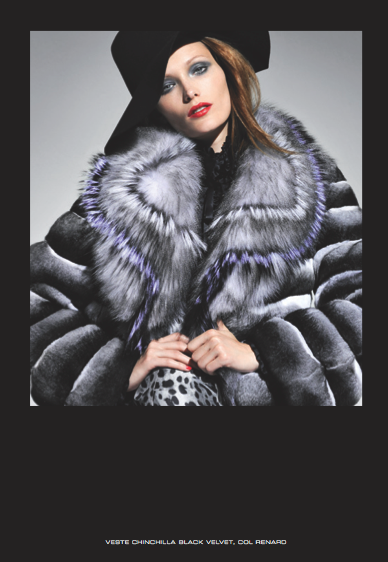
Of course, I am fortunate enough to rave about an Albino chinchilla (natural immaculate white when it is usually black, gray and white).
Tell us about your Winter 2011 collection. What are the themes?
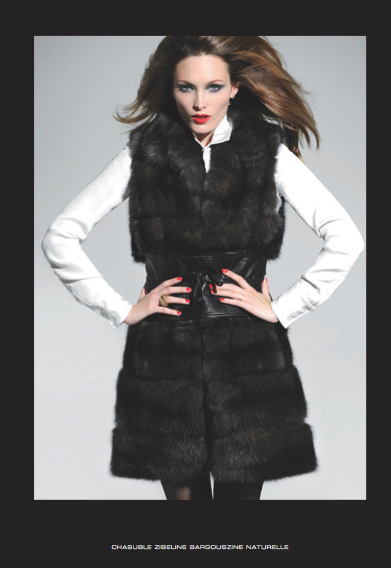
We’ve done a lot of sleeveless or short-sleeved garments that can be worn with chunky sweaters, mittens, or over Chanel jackets. Short coats with crew necks that can also be accessorized with chunky scarves, vintage models with exotic skin inlays. We focused on “little pieces” that mix easily, like short jackets with ¾ sleeves.
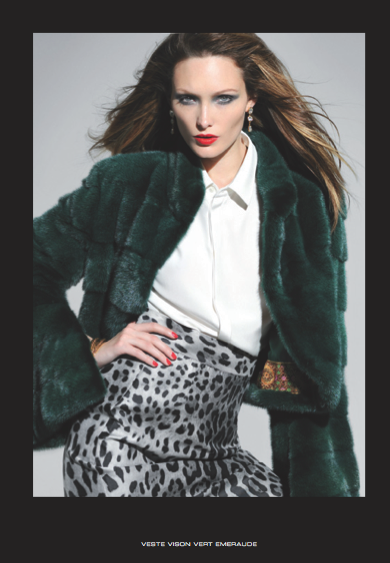
Where do you find your inspiration?
Everywhere, and especially when you look at the fashion of the 40s-50s and 60s-70s, cinema is an inexhaustible source of inspiration too, and then there’s everything beautiful you can see, like works of art with a perfect curve or architectural symmetry that can be reinterpreted.
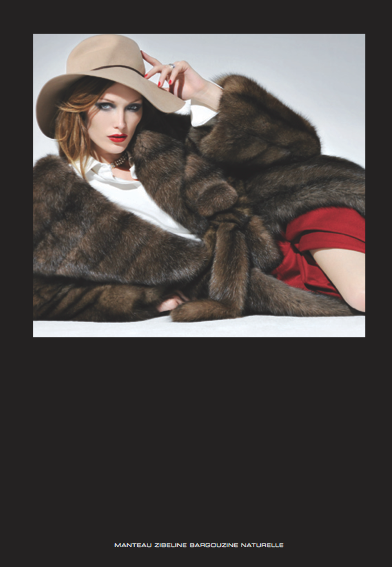
Do you have any iconic Milady pieces?
If we’re talking about Milady icons, sable is undoubtedly the calling card, and in particular a short jacket with a small collar and a very wide split sleeve.
What fur piece would you recommend to our readers to help them rediscover fur?
A pretty toque to start with, or a short mink piece in an original color like Kohi-Noor (natural white mink with black and gray edges).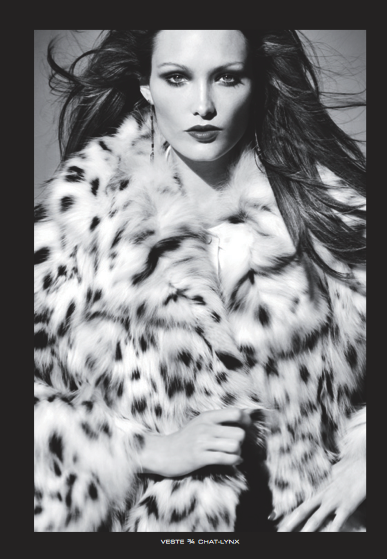
Cette publication est également disponible en :

