

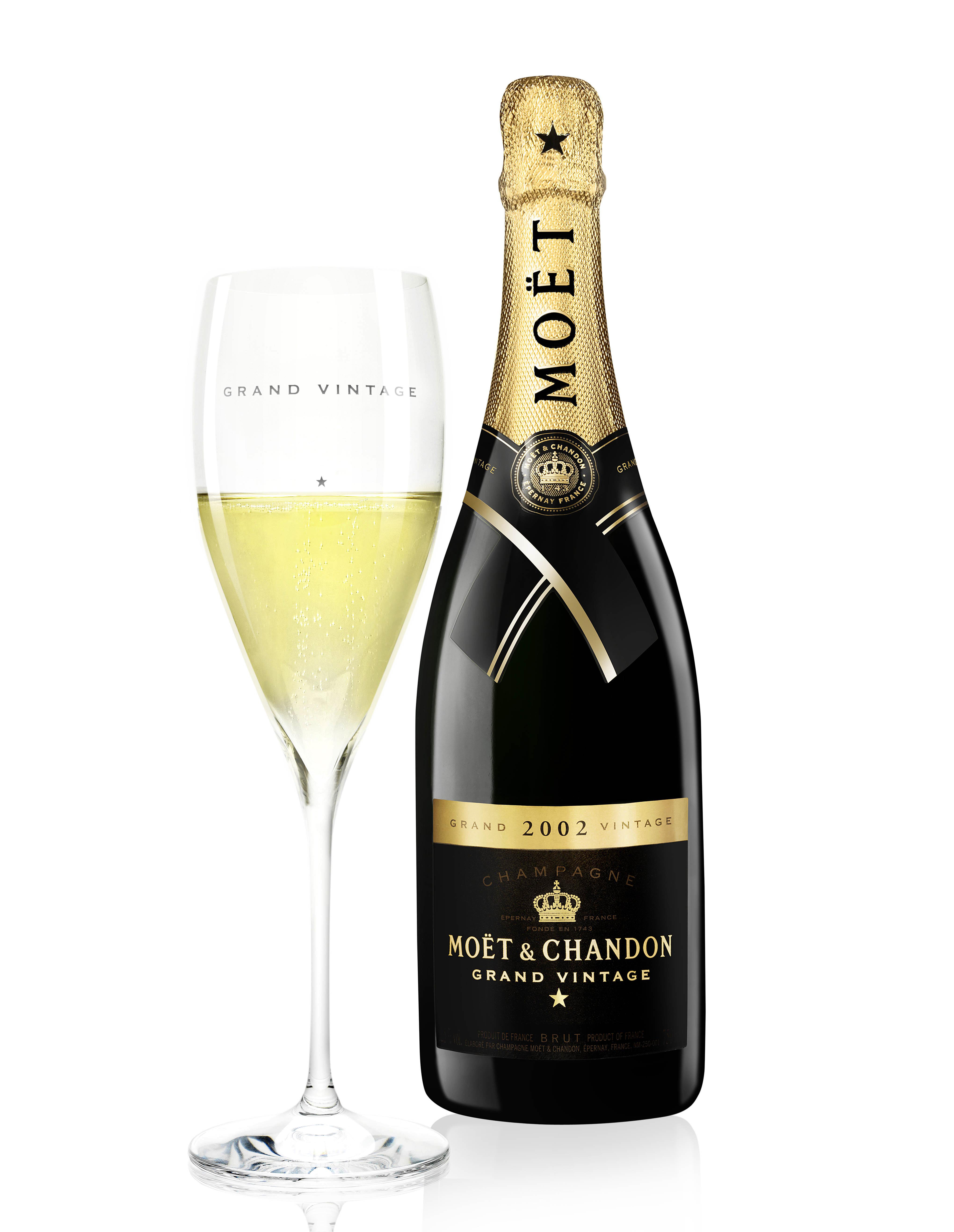
Founded in 1743, Moët & Chandon is one of the world’s most prestigious champagne houses, with the largest estate in Champagne. The visionary spirit of Jean-Rémy Moët, grandson of founder Claude Moët, has long inspired the House, for he knew better than anyone how to transform
this heritage into a fabulous oenological adventure. Always in search of the ideal balance between tradition and innovation, Jean-Rémy Moët gave birth to champagne as it is today. The timeless values he established still reign in the House that bears his name, and his successors have perpetuated his legacy and vision of excellence by creating Moët & Chandon
Grand Vintage champagnes.
Moët & Chandon Grand Vintage champagnes were created in 1842 to meet the demand of English and American wine lovers for more mature wines, and are complex wines with an assertive personality. These subtly matured champagnes express the quintessential know-how and experience
of the Cellar Master, who has created a unique wine from the grapes of a single, exceptional year. Moët & Chandon’s Grand Vintages are all the more rare and precious in that most champagnes are not vintage wines, but are made by blending wines from different harvests in order to recreate a consistent, coherent style each year. Vintages account for less than 10% of the wines made in Champagne, and are not created every year. In 161 years – from 1842 (the first) to 2003 – only 69 Grand Vintages have been produced by Moët & Chandon. Prolonged aging – often far longer than the legal minimum of three years – brings out all the finesse and complexity of these highly sought-after aromas.
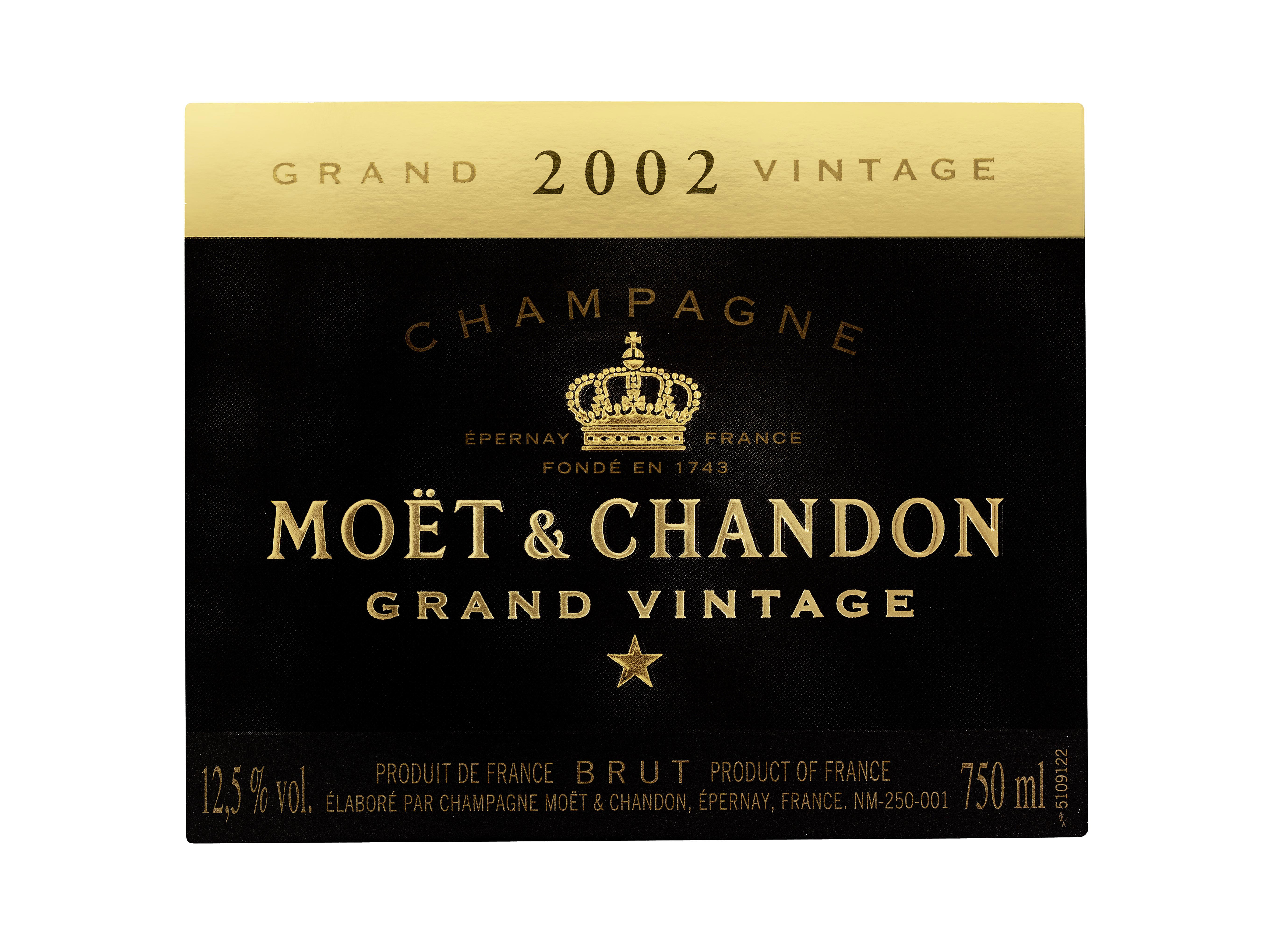
For centuries, the winegrowers of Champagne, like those of every other winegrowing region in France, made their wines from the annual harvest, with no particular reference to the year of production. It wasn’t until the 19th century that the practice of reserving certain top-quality
wines for ageing became widespread. Since then, the concept of blending the wine of the year with a variable proportion of reserve wines has become the rule in Champagne. At the same time, the idea was born of creating a vintage champagne from a blend of grapes from the same
harvest of particularly remarkable quality. By offering the British their first vintage champagne, produced in 1842, Moët & Chandon, established in England since 1750, marked a decisive step in its history. For the first time,
a rectangular label was printed entirely on the bottle, bearing the words “Vintage”. From this day on, connoisseurs will have the pleasure of experiencing a new yet essential dimension of champagne: the exclusivity of a wine with a unique character, the memory of an unforgettable moment.
Drawing on Moët & Chandon’s centuries of experience, Chef de Cave Benoît Gouez has had every opportunity to create a champagne that is assertive, complex and mature, with a singular personality, a champagne that will remain eternally unique, the ultimate incarnation of the most sumptuous wine there is. If Moët & Chandon Imperial renews the universal ideal of a champagne crafted each year with fervor by the college of Moët & Chandon oenologists, a Grand Vintage is a
creation without equal, a rare and distinguished embodiment of the Chef de Cave’s personal vision. Perfectly free, he lets himself be guided by his tastes, his know-how and his innate talent
to select and blend the most characteristic fruits of a particular harvest.
Moët & Chandon grand vintage 2002
THE REFINEMENT OF MATURITY
Grand Vintage 2002 is the culmination of the evolution of the entire Moët & Chandon Grand Vintage concept, a true coming-of-age. The perfect balance of the grapes, the seven years of ageing – a period unprecedented since the 1930s – combined with low dosage,
give this wine complexity, maturity and harmony. Grand Vintage 2002 is the epitome of Moët & Chandon Grand Vintage champagnes.
MATURITY
Grand Vintage 2002 represents the culmination of an evolution in the House’s philosophy. Initiated in 2007 with the release of Grand Vintage 2000, it is based on greater freedom in blending, longer cellaring and lighter dosage. The result is wines that are brighter, more fully matured, and more expressive and characteristic of a particular harvest. After Grand Vintage 2000 and 2003, the standards set with Grand Vintage 2002 are the new benchmark for future vintages.
AMAZING HARMONY
Moët & Chandon Grand Vintage 2002, the House’s 69th vintage, has a remarkable presence. The year’s temperate weather conditions, the heat and wind during the harvest, and the homogeneity of ripeness between grape varieties and villages, laid the foundations for a wine of exceptional harmony. Its alcoholic potential of 10°5, the tenth highest since 1942, combined with a light dosage (5.5 g/l), give it a ripe, chiselled personality.
A DISTINGUISHED MILLESIME
Released at full maturity, Moët & Chandon’s Grand Vintage 2002 is the first since 1930 to have matured for seven years. Traditionally, Moët & Chandon vintages were aged for five years – the legal minimum being three – and it is interesting to
note that Grand Vintage 2002 was released after Grand Vintage 2003. Cellar Master Benoît Gouez rightly felt that releasing Grand Vintage 2002 in 2008 would not have done justice to its exceptional promise, and decided to give it the time it needed to express its extraordinary potential. On the other hand, Grand Vintage 2003, born of a particularly warm year which enabled it to reach maturity more quickly, could be marketed in 2008. The Cellar Master therefore decided to reverse the order in which these two vintages were launched, so that each could be brought to market at the best possible time. This choice testifies to the importance Benoît Gouez attaches to carefully “listening” to maturing wines, in order to create more mature champagnes, vintages whose intrinsic qualities have had all the time they need to fully express themselves.
THE CLIMATE YEAR AND THE HARVEST
A sunny, wet but mild winter was followed by a warm, dry, frost-free spring. Summer was marked by fine, sunny, dry spells, framed by a few dull, rainy periods. September was dry, though marked by stormy rainfalls that were sometimes
impressive (on the 3rd, 8th and 9th). The wind dried the bunches, and the excellent health of the grapes enabled us to stagger the opening dates of the harvest from September 12 to 28, in order to achieve the best possible ripeness in each cru. The combined effect of the wind and the hot, dry weather concentrated the juices
during the harvest (passerillage), particularly on the Chardonnays. With 10.5% potential alcohol volume (the highest since 1990) and 7.16 g H2SO4/l total acidity, the ripeness balance
is superb. The harvest is remarkably homogeneous across grape varieties and regions, from start to finish.
Moët & Chandon Grand Vintage 2002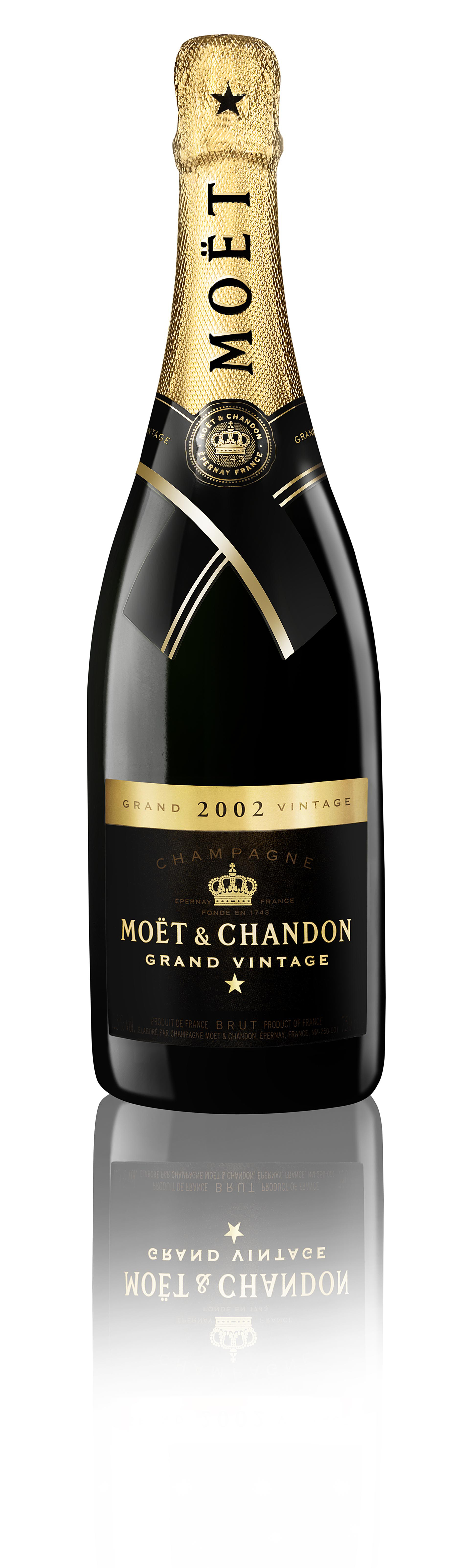
Blend:
51% Chardonnay, 26% Pinot Noir, 23% Pinot Meunier
Disgorgement:
November 2009
Dosage:
5.5 g/l
Tasting notes:
Grand Vintage 2002 is ripe, harmonious and chiseled. Seven years in the cellar have developed a toasty maturity, both sweet and dry, with warm notes of harvest and frangipane,
toasted almond and malt, mocha and light tobacco. Then comes ripe, juicy fruit: pear, candied citrus and stone fruit (mirabelle plum, nectarine, white peach). On the palate, precise construction and velvety substance. The round, creamy attack gradually reveals the straight, taut structure. The fruit then becomes fresher: tangerine and pink grapefruit. The deliberately low dosage (5.5 g/l) preserves the firm, chiselled finish, deliciously
tonic, refreshing with notes of rhubarb and redcurrant, quinine and tangy citrus.
Moët & Chandon Grand Vintage Rosé 2002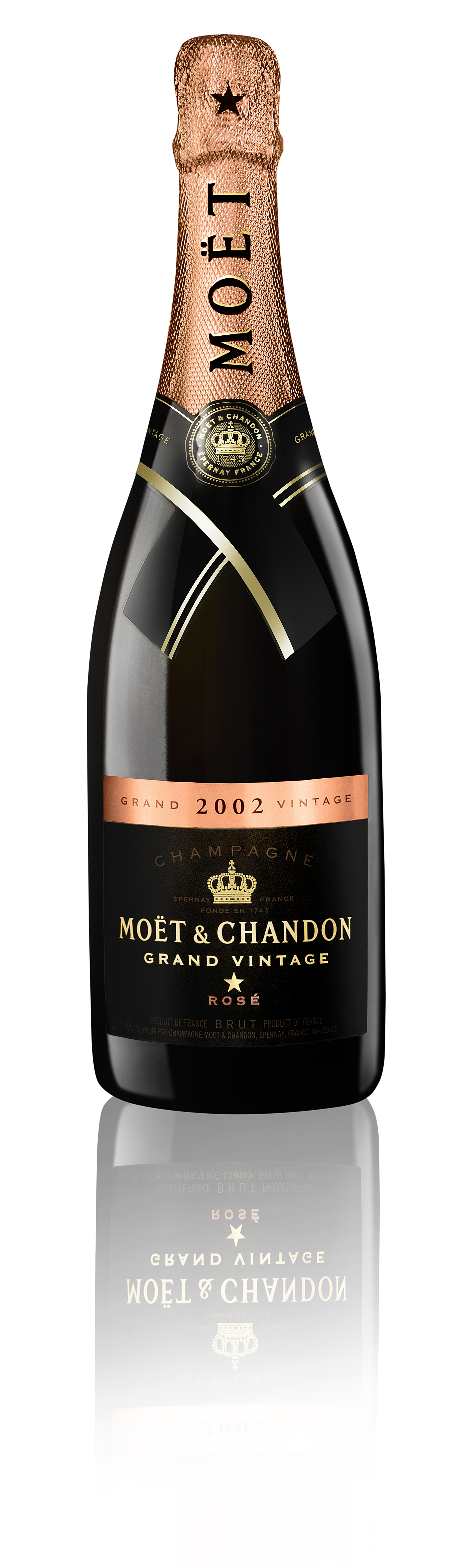
Blend
51% Pinot Noir (of which 27% red wine), 28% Chardonnay,
21% Pinot Meunier
Disgorging
May 2009
Dosage
5.5 g/l
Tasting notes
Grand Vintage Rosé 2002 is ripe, harmonious and precise. Cherry, plum and fresh fig mingle with wild berries: wild strawberry, blueberry, blackberry. Seven years in the cellar have enriched the aromas with subtle malty, peaty notes and sweet spices (clove, cinnamon, licorice). Some vegetal and floral notes: mint and anise, rose and honeysuckle. Precise construction on the palate. The delicately coated material rests on a dense, long-lined structure.
The deliberately low dosage (5.5 g/l) preserves the finish, chiseled and taut, deliciously astringent, refreshing on notes of cherry and infusion.
Alcohol abuse is dangerous for your health, so consume in moderation!
Cette publication est également disponible en :

