

“Style is a point of view and only one” Andrée Putman.
Until February 29, 2011, the Hôtel de Ville de Paris is devoting a retrospective to Andrée Putman, icon of French design and ambassador of “style à la française”. This is a unique opportunity to explore the work of this 85-year-old sacred monster and to get a glimpse of the very essence of her art: furniture reissues, reconstructions of places such as the office of the Minister of Culture, the famous “Voie lactée” piano, the luxury hotels she designed…
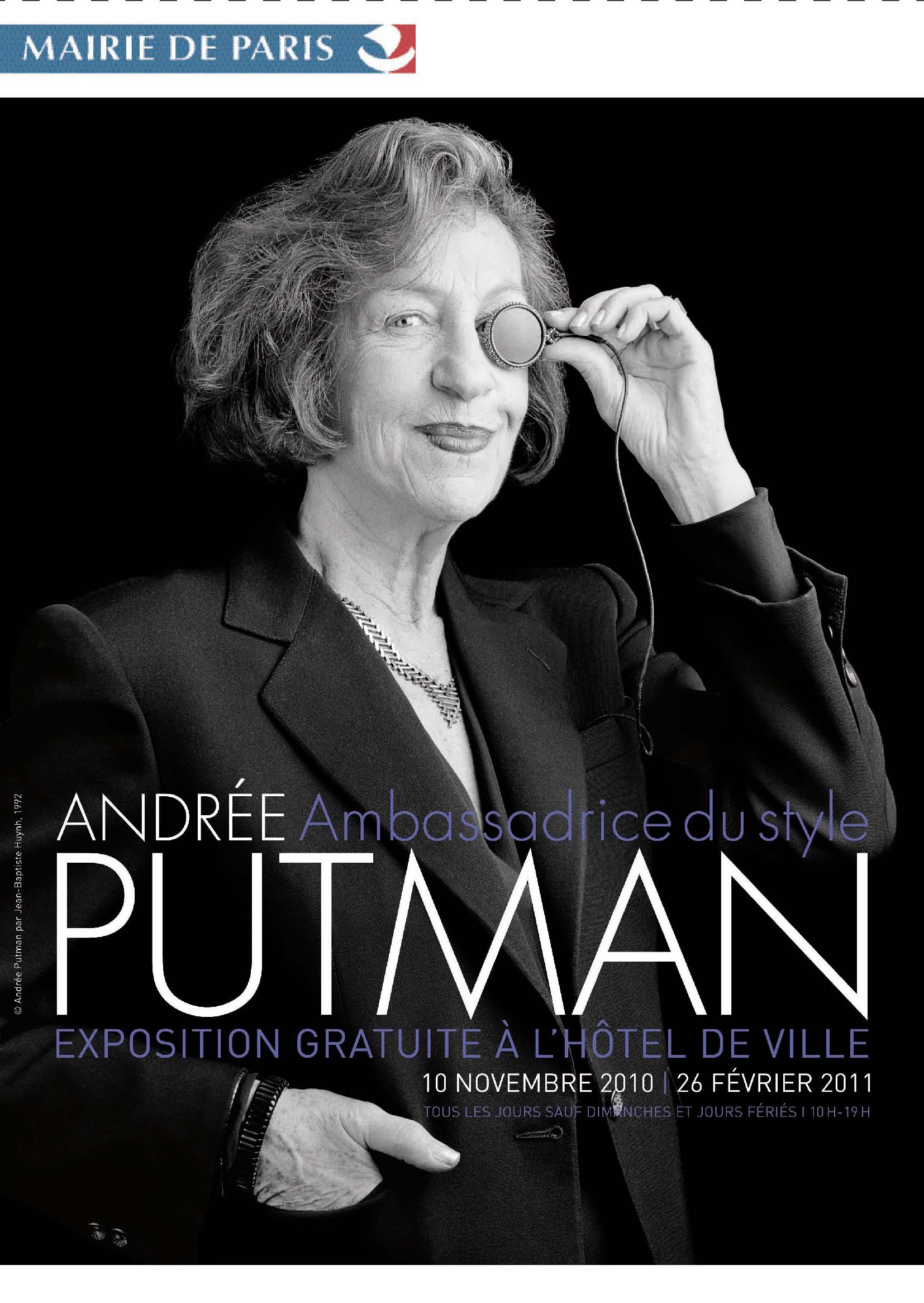
Affiche de l'exposition Andrée Putman ©1992 Jean-Baptiste Huynh
And yes, Andrée Putman’s style is an art, but an art beyond comparison, which has enabled her to furnish hotels all over the world, as well as stores, private residences and ministers’ offices, in a refined style that has since become her signature. From the designer who believes that“luxury is being demanding“, we retain the exacting rigor of a sober yet assertive minimalist style, completely in tune with the secret expectations of an age mired in an abundance of objects and a profusion of forms.
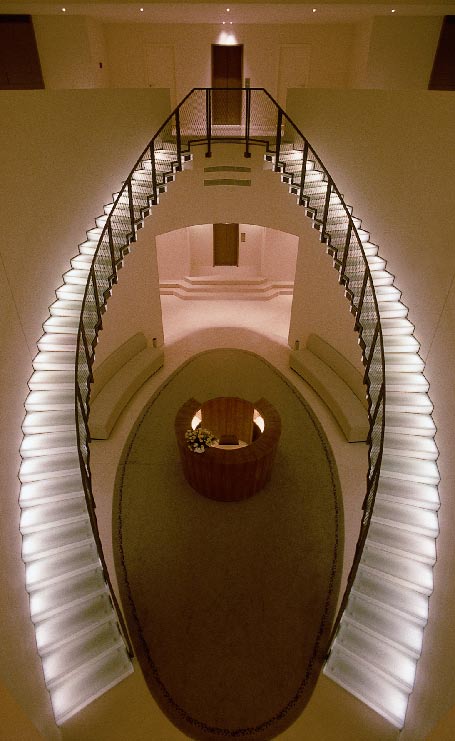
Gildo Pastor Center, Monaco, 1996. © Deidi von Schaewen
But that doesn’t mean we can’t appreciate the touches of humor, fantasy and even poetry she’s managed to infuse into her timeless yet terribly modern style:“It has to be possibly inspired by yesterday, completely adapted to today, and indicate how it’s going to evolve tomorrow,” Andrée Putman’s deep voice repeats in an interview projected in an off-beat part of the exhibition. Andrée Putman likes to mix eras and materials, always with two essential elements in mind: light and space, to which she adds a marked taste for black and white, softened over time by a cameo of beige and grey.
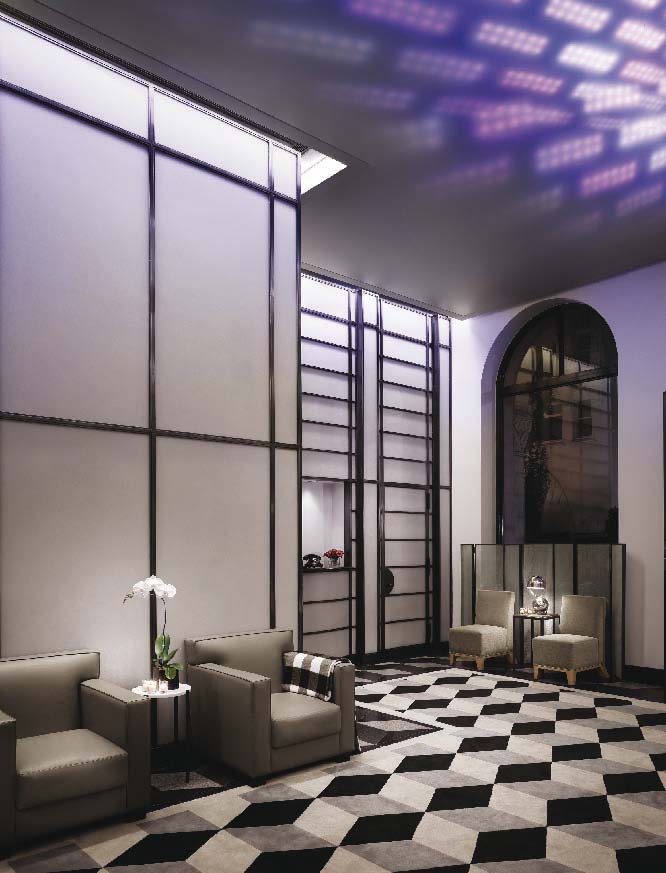
Morgans, 2008. © Nicolas Koenig courtesy of Morgans Hotel group
The first part of the exhibition is on the second floor. It traces Andrée Putman’s career from her early years, through her collaboration with Prisunic stores in 1958 and her years as editor of the art magazine L’Oeil, to the elements that formed the basis of the Putman style.
Andrée Putman was born in Paris in 1925 into a bourgeois family of bankers, her mother a pianist and her father a graduate of the Ecole Normale Supérieure. She spent her childhood between her apartment in the 6th arrondissement and the Abbey of Fontenay, a 12th-century Romanesque abbey that once housed the workshops of the Montgolfier brothers, of whom she is a descendant through her mother. This first encounter with architecture left a lasting impression on her artistic sensibility, forging her taste for sober, simple, even austere spaces.
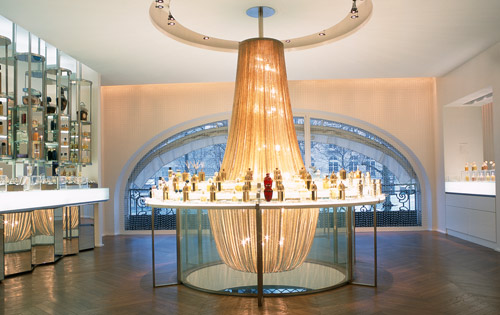
Boutique GUERLAIN Champs-Elysées, 2005 © Eric Laignel
Trained as a musician, she won first prize at the Paris Conservatoire at the age of 19, but was put off by the ascetic lifestyle to which she seemed destined, and turned to journalism for various magazines, before becoming artistic director of the “Maison” department at Prisunic stores in 1958. Married to collector, publisher and art critic Jacques Putman, she maintained intimate relations with the small world of art, frequenting many artists including Niki de Saint Phalle, Giacometti and Samuel Beckett.
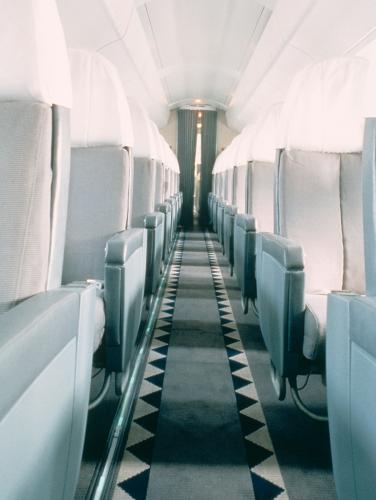
Le Concorde, 1991 © Deidi Von Schaewen
In 1968, Didier Grumbach spotted her in the Mafia style agency, and hired her to set up a new company initially focused on the development of ready-to-wear and textile Créateurs et Industriels. It was there that she discovered such talents as Jean-Charles de Castelbajac, Issey Miyake and Thierry Mugler. It was during this period that Andrée Putman tried her hand at interior design, fitting out offices in former SNCF premises.
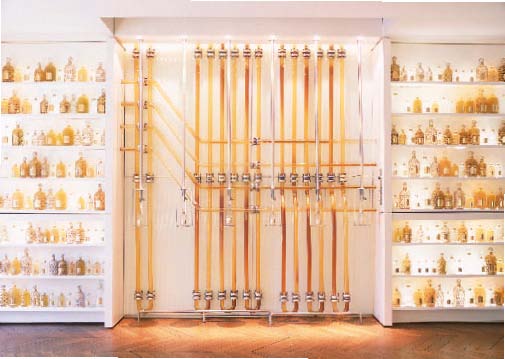
Boutique GUERLAIN Champs Élysées, 2005. © Eric Laignel
In 1978, Andrée Putman launched her own company, Ecart , which was succeeded twenty years later by Agence Andrée Putman, which she still runs in the 14th arrondissement of Paris. She specializes in re-editing furniture by designers from the 1920s and 1930s, such as Jean-Michel Frank, Eileen Gray, Pierre Chareau and Robert Mallet-Stevens, which the interior designer’s infallible eye has brought back to life. Thus began a brilliant career in design and interior architecture, which has taken her to the four corners of the globe, including New York, where she is the embodiment of “style à la française”.
On the ground floor of the exhibition, partly on a long, lacquered black podium, you’ll discover emblematic Andrée Putman creations and reconstructions of the places that have made her famous. The exhibition is enhanced by a number of videos that give a voice to this great lady of design.
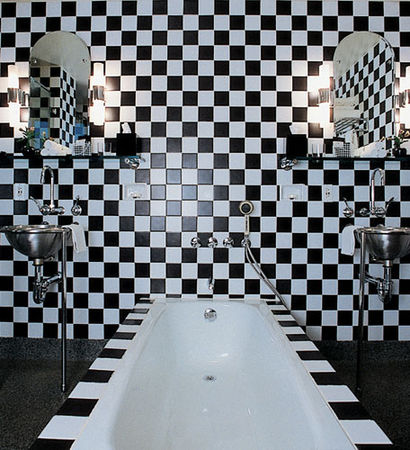
Morgans - 1984 salle de bains © Deidi Von Schaewen
The famous black-and-white checkerboard bathroom created for the Morgans Hotel in New York in 1984 was recreated for the exhibition. Working on a limited budget, the interior designer had succeeded in turning an inexpensive material, porcelain stoneware, into the epitome of chic in Manhattan in the ’80s.
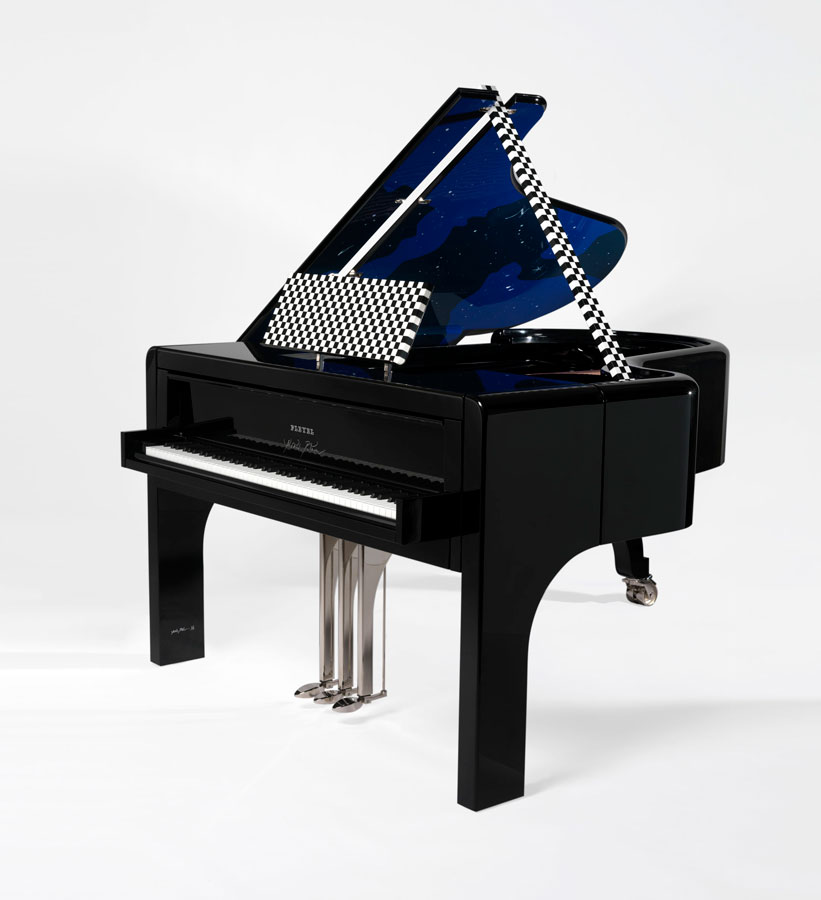
Piano à queue Voie Lactée © Marc Abel
Other highlights include the magnificent Voie Lactée grand piano designed for Pleyel in 2008, the interior of a skilfully reconstructed Concorde, and a beautiful reinterpretation of Louis Vuitton’s Steamer bag as a hot-air balloon basket in homage to its illustrious ancestors.
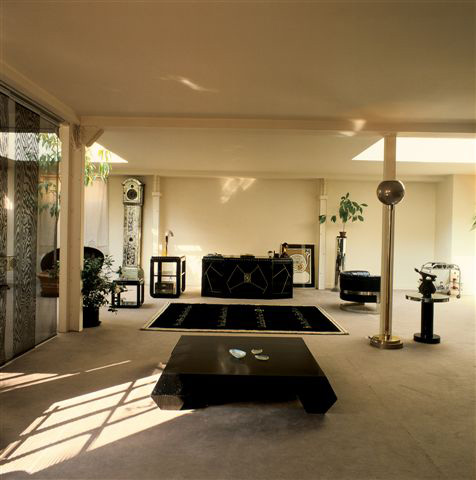
Appartement d'Andrée Putman © Deidi von Schaewen
Andrée Putman’s unambiguous rejection of traditional “good taste” without risk or originality has made her the world’s ambassador of a style – “style à la française” – a blend of purity and originality that gives her work its distinctive character. This exhibition, though small, allows us to fully appreciate the contribution of this great lady to modern interior design and architecture. Although the lack of explanation of certain compositions is sometimes deplorable, it’s easy to understand the outline of a style, the beginnings of explanations of a relative beauty that would endure for years to come, regardless of any technical considerations.
After all,“beauty is the mystery of harmony, a moment of grace that can’t be explained“, right, Madame Andrée Putman?
Exhibition Andrée Putman, ambassadress of style
Hôtel de Ville de Paris Salle Saint-Jean
5 rue de Lobau
75004 Paris
Every day except Sundays and public holidays, 10 a.m. to 7 p.m. – Free admission
Agence Andrée Putman Tel: +33 1 55 42 88 55 www.andreeputman.com
Marie-Odile Radom
Cette publication est également disponible en :

