

Macbeth after Shakespeare by Heiner Müller.
It’s trashy, it’s gory. With his latest production, presented at the Comédie de Saint-Etienne, Jean-Claude Berutti offers an apocalyptic vision of a world inhabited by power-hungry characters. It’s up to the actors to give it their all. The spectator, afterwards, to demand his dose of hemoglobin…
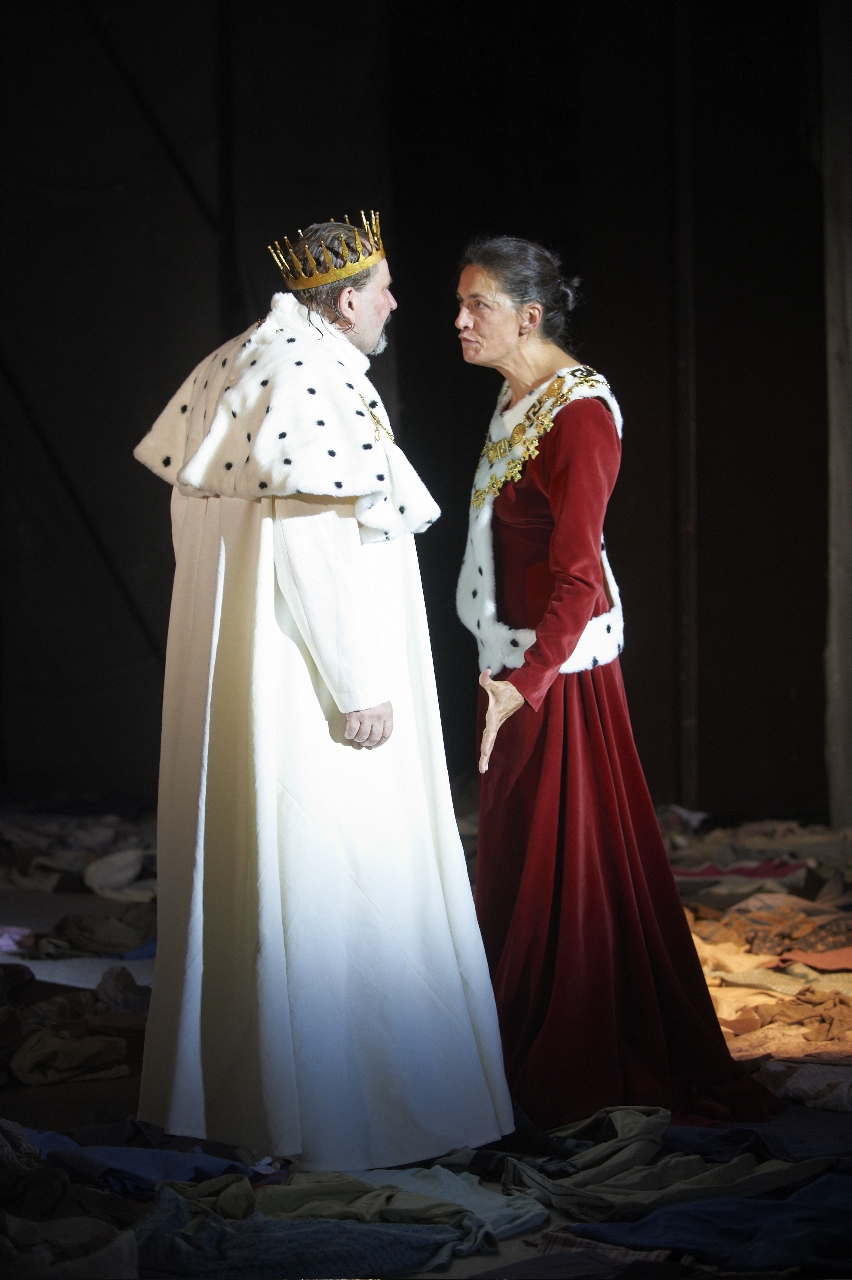
Macbeth (Jacek Maka) et sa Lady (Ursa Raukar), après la prise du pouvoir
The tragedy of a world.
On stage: dim lighting. Piles of clothes litter the floor like so many departed souls. General Macbeth, dressed in camouflage, returns victorious from his day of battle defending the Ducan crown. Amplified sounds of war. Then the silence of the moors, where Macbeth meets three witches who predict that he will become Duke of Cawdor, then King of Scotland. My sister,” says one of them, how did you get that blood on your clothes? I had my lunch on the battlefield, replies the other. Imagined by the director as vamps of the night, we know that Macbeth will not be able to escape the prediction of these voracious seductresses… If the “Müllerian” version of Macbeth takes the same argument as the Shakespearean moose, it is more complete than Shakespeare’s version. Heiner Müller adds small episodes with peasant characters, explains Jean-Claude Berutti in an interview on www. theatre-contemporain.net, servant characters that put into perspective what we might understand by tragedy, and situate tragedy in a different place. It’s not just the tragedy of King Macbeth. With Heiner Müller, it’s the tragedy of the world we live in.
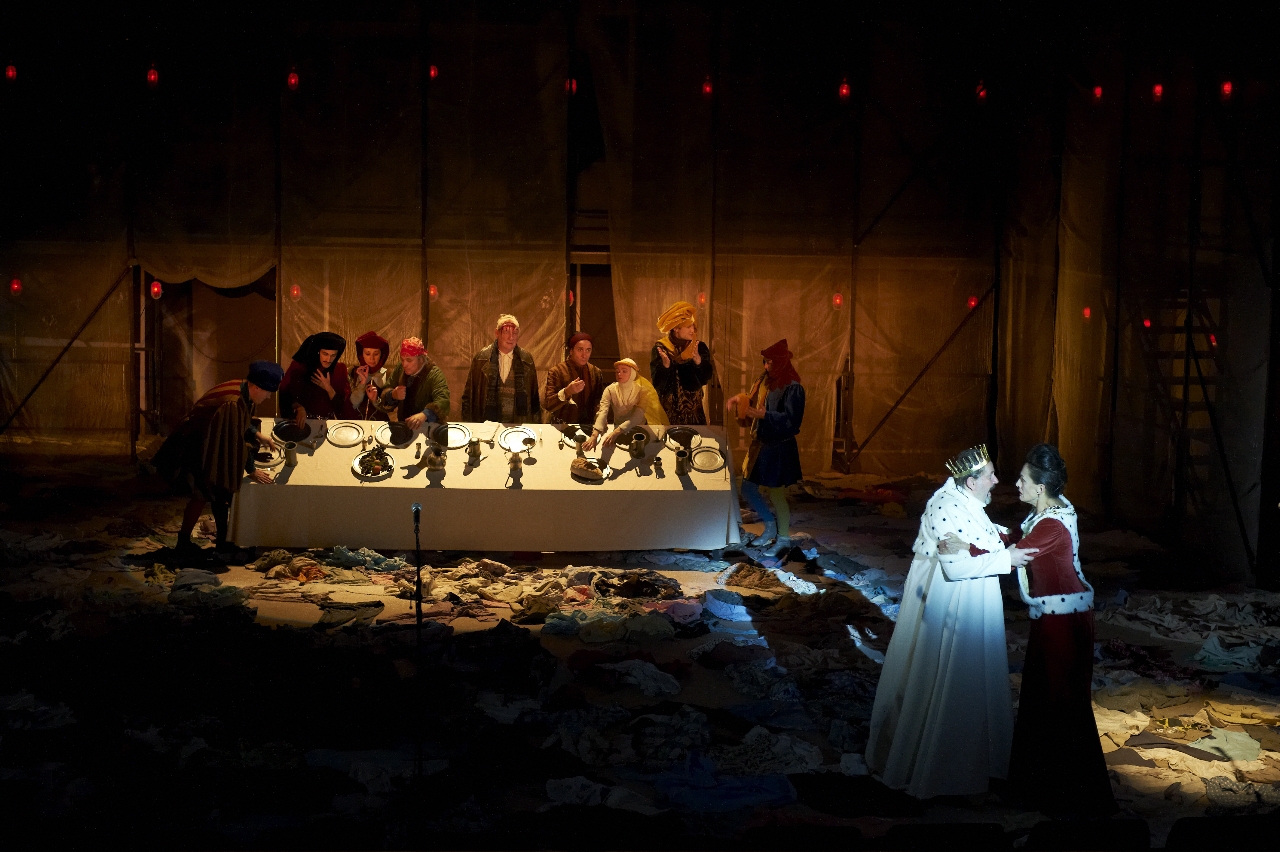
Lady Macbeth : ''Il te manque ce qui tient notre vie en dehors de la mort.''
When Macbeth, with the complicity of his Lady, kills King Duncan and seizes power, the “blind crusher” is on its way. Bloodthirsty scenes of vengeance and death follow, as the couple gradually descend into madness, and servants, peasants and soldiers, driven by remorse, join in the carnage. A pregnant woman has her belly cut open and her throat slit, another rips out his penis, a third hangs himself… Macbeth and his Lady are monsters, just as the others are monsters,” Jean-Claude Berutti points out, almost amused, and in the end, they’re no more monstrous than the others. Perhaps even less so?
A permanent gap.
The director has chosen to go all the way with his bias: gore and trash.
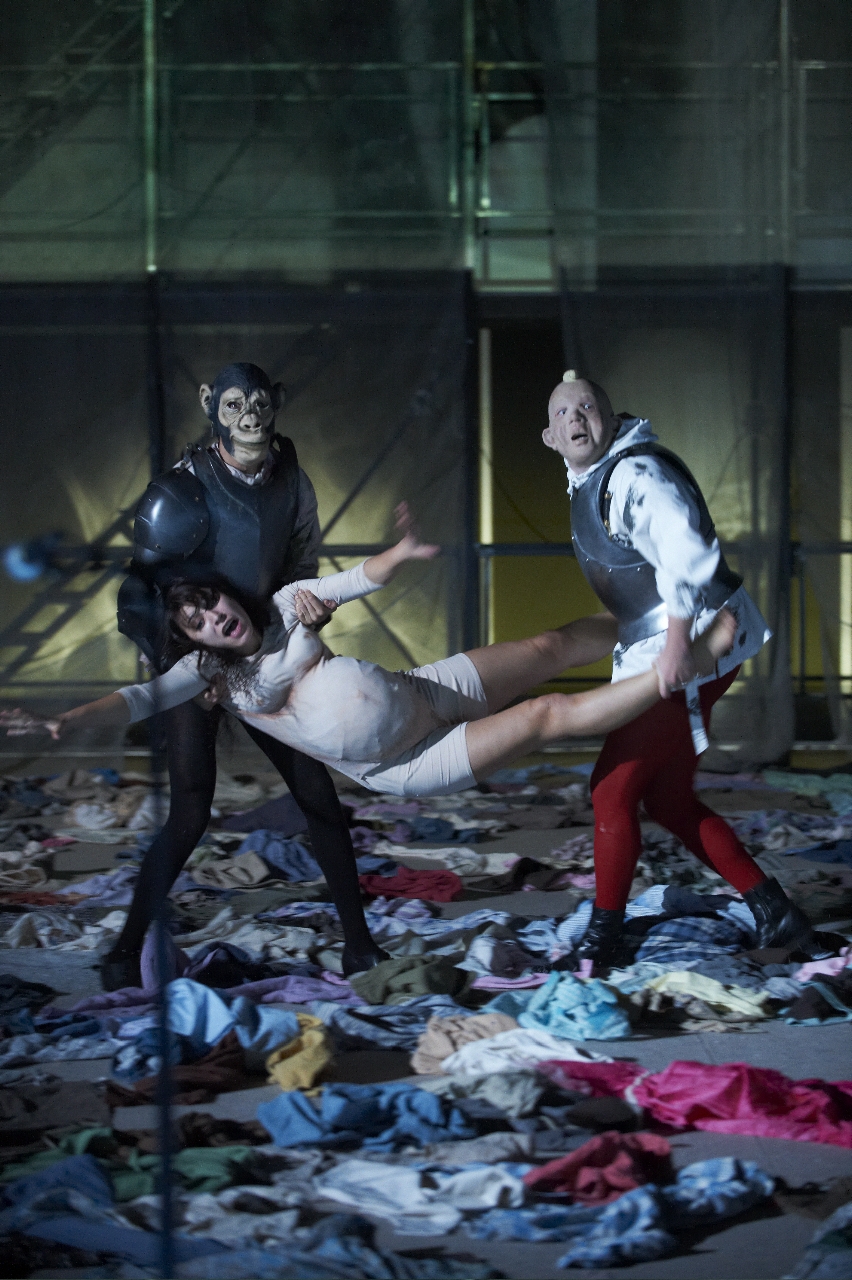
In this respect, Heiner Müller’s play, translated from German by Jean-Pierre Morel, lends itself perfectly to the task; a veritable acting machine that the troupe of French-speaking actors from the four corners of Europe seize on wholeheartedly. They all seem to revel in the great effusions. Their accents awaken the musicality of Müller’s language, carnal and obscure, which summons everything to the stage, from the most intimate to the most collective. While the grotesque, which is used extensively in the staging, allows us to put a little distance between ourselves and look at the show from an angle, we’ll be caught up by the set in any case: a scaffolding like an ephemeral castle, onto which skeleton X-rays are projected. So, should we let ourselves be “bitten” or reject the whole thing? It’s hard to hold back the laughter that erupts at the world’s farce. Or do we protect ourselves, through the game of masked truths, by saying to ourselves: “It’s not me, it’s Macbeth.”
That’s the power of theater. Definitely worth a try.
by Odile Woesland
November 4 to 9, 2010 – www.comedie-de-saint-etienne.fr – 04 77 25 01 24
photo credits – Régis Nardoux
Cette publication est également disponible en :

