

The centenary of Jean-Louis Barrault (1910-1994) could not go unnoticed. To rediscover the different facets of this sacred theatrical monster, Jeanine Roze, producer of the Sunday morning concertshas come up with an original and inspired idea. From September 2010 to June 2011, it will be possible to follow a course in Paris, featuring readings, screenings, performances, concerts and exhibitions, in places that represent the high points of Jean-Louis Barrault’s life.
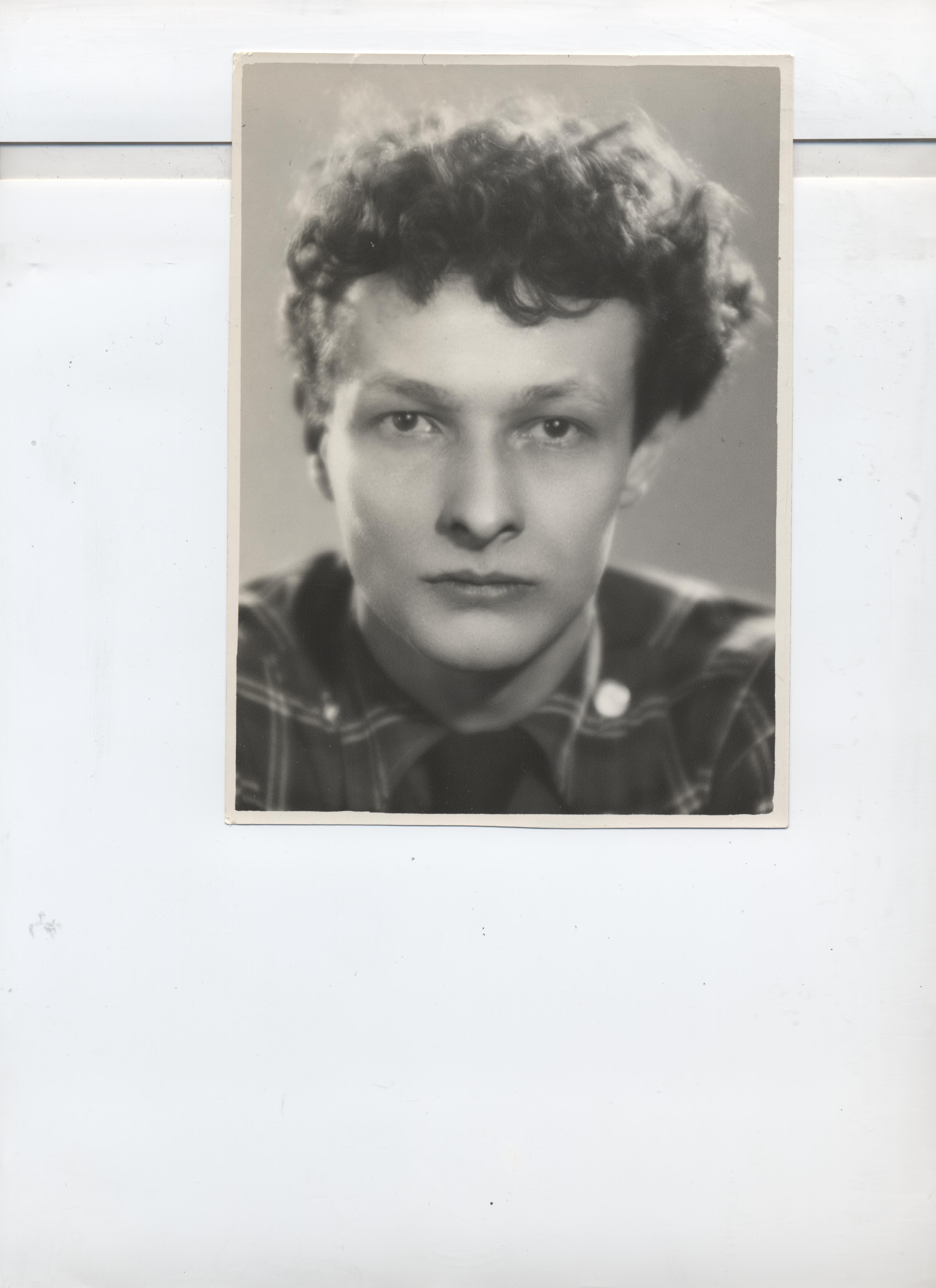
Jean-Louis Barrault, dans sa prime jeunesse. DR
As time goes by, we remember him as Baptiste, the man in white from Les Enfants du Paradis . Over the years, we recall his association with the Surrealists, his closeness to Antonin Artaud and the Prévert gang, and his complicity in directing Claudel’s plays. With nostalgia, we recall Madeleine Renaud, with whom he founded the Renaud-Barrault company, which became the leading ambassador of French theater in the world. And then, if you look hard enough, you discover that he was also a publisher, with close ties to music and architecture. In fact, he had an insatiable curiosity for all forms of artistic expression. When you delve into Barrault’s life,” explains Jeanine Roze, was a shock. He associated with writers such as Samuel Beckett, Nathalie Sarrault, Camus, Ionesco, Duras, composers like Pierre Boulez and others. who was musical director of his company for over ten years, decorators… Even Yves Saint-Laurent dressed Madeleine Renaud… He really was a visionary!
So it’s hardly surprising to discover the long list of venues lining the centenary route: Théâtre du Vesinet, Théâtre de l’Atelier, Grenier des Grands-Augustins, Comédie Française, Cinémathèque Française, Théâtre Marigny, Théâtre de la Ville, Théâtre du Palais-Royal, Théâtre National de l’Odéon, Musée d’Orsay, Théâtre du Rond-Point, Théâtre Antoine, Théâtre des Champs-Elysées, Centre National du Théâtre, Opéra National de Paris… The artists who knew, loved and admired Jean-Louis Barrault will come to testify, perform and read… So many images, so many memories, so many words…
It‘s a journey to live with Jean-Louis Barrault,” says Jeanine Roze with emotion in her voice. It’s as if her dream was that, from stage to stage, we’d be able not only to meet the artist, but above all to discover the man he was. I’d like us to be able to share a little of his soul, because he’ll be everywhere… To build this journey, she had to immerse herself in the artist’s life, reread Souvenirs pour demain, a book in which he retraces his life as a creator, undertake extensive research into his life and his friends, and meet the actors who quote him today, such as Denis Podalydès of the Comédie-Française. Yet Jean-Louis Barrault was no stranger to her. I met him in 1975, when I was just starting out in concert production, and was looking for a venue. The Théâtre d’Orsay (in the former garde d’Orsay) which he was directing at the time, was the place to be. There was an energy, a spirit of freedom, something abundant. It was cheeky of me to go there like that, but I didn’t realize it. So I was received by Jean-Louis Barrault. I told him about my idea of organizing free concerts on Sunday mornings, featuring young artists who weren’t well known to the general public. I remember that moment very well. When he said to me: “Here, I’m giving you my theater. That’s how the Sunday Morning Concerts were born. And it’s been going on for 35 years! Without Jean-Louis Barrault, I wouldn’t be here! It’s easy to see why it was so important for Jeanine Roze to celebrate this centenary. I couldn’t just do nothing!
The route, however, was not easy to climb. At first, nobody believed in it. So I went straight to Pierre Boulez. It was unthinkable that he wouldn’t be involved in this tribute. He said YES. Immediately. And right away, I had the support of Pierre Bergé. . By dint of persistence, she was able to surround herself with partners such as the Institut National de l’Audiovisuel and the Bibliothèque Nationale de France – Département des Arts du Spectacle, and convince both private and public theaters to take part in this adventure. So, there will be no spectacular operations. We modestly did what we could do… That forced us to look deep. To stay as close as possible to what Jean-Louis Barrault was. A deeply inspired man who listened to others. A generous artist.
A few events to note in your diary…
– Théâtre de l’Atelier Charles Dullin, September 13, 2010
It was certainly in this theater that it all began for Jean-Louis Barrault. On September 6, 1931, his twentieth birthday, he made his debut at L’Atelier in a tiny role as a servant in playwright Ben Jonson’s Volpone, adapted by Jules Romains and Stefan Zweig. I was being born for the second time,” he writes in Souvenirs pour demain, a book in which he recounts his work, his intuitions and his difficulties, and which will be reissued in September. Why a second birth? It was in the Atelier troupe that Jean-Louis Barrault met another young actor, Etienne Decroux, who stylized his role and played it almost by dancing. It wasn’t long before the two of them became accomplices. set off in search of a new mime. Decroux is the researcher explains Jean-Louis BarraultHe’s a genius at selection. He doesn’t let anything go by. In front of him, I improvised: he chose, classified, retained, rejected. And we’d start again. That’s how the famous walk in place took us three weeks to calculate: imbalances, counterweights, breathing, energy isolation… On September 13, 2010, you’ll be able to discover this quest for the absolute and for perfection through a reading by Fabrice Lucchini (subject to confirmation) and the screening of an Ina archive film. And to put mime, the art so dear to Jean-Louis Barrault, into perspective, carte blanche will be given to Camille Boitel, who this summer presented her show l’Immédiat at the Périgueux mime festival, Mimos.
– Odéon Théâtre de l’Europe: Pierre Boulez pays tribute to Jean-Louis Barrault, November 19, 2010
It’s no coincidence that Pierre Boulez has chosen to pay tribute to Jean-Louis Barrault by performing Incises, a piece he composed in 1996, and Stravinsky’s Histoire du Soldat with the Ensemble Intercontemporain. The former is in some ways representative of his musical style. The second blends music and theater. A fine synthesis that reflects the exceptional collaboration between the two artists. It was Arthur Honnegger who introduced Pierre Boulez to Jean-Louis Barrault in 1946. The young man became musical director of his company for over ten years, and thanks to the troupe’s international tours, forged links with other artists and discovered effective models for concert organization. In 1954, these experiences led to the creation of the Concerts du Domaine musical within Jean-Louis Barrault’s theater. His attachment to music was profound, and inseparable from his quest for total theater. Our art becomes intoxicating precisely when it remains caught up in rhythm and tends towards music,” he wrote. In this way, he made a major contribution to revealing the work of a new generation of musicians.
– La Symphonie fantastique in the nave of the Musée d’Orsay, December 7, 2010
When the public entered the Gare d’Orsay, the Théâtre d’Orsay, they were in a kind of actor’s attic; they were at home. There were no artists’ entrances: the artists entered through the same door as the audience, he wrote. Which was truly magical,” recounts Marie-Françoise George, who was a member of the Renaud-Barrault company from 1974 to 1981, was that we couldn’t get away from each other. We were all in it together. To revive this family spirit, on December 7, the Musée d’Orsay will be staging a concert in the great nave, where we can all sit together on the floor and listen to Berlioz’s Symphonie fantastique , performed by the Orchestre philharmonique de Radio France under the direction of Myung Whun Chung. Why this composer? Because Jean-Louis Barrault played Hector Berlioz in Christian Jaque’s film of the same name. So, from one art form to another, he built bridges…
– Théâtre des Champs-Elysées
Jeanine Roze will also pay tribute to the artist by dedicating four Sunday morning Concerts to him, on Sunday October 10 at 11 a.m., December 12, November 14 and May 29, 2011.
In September, as part of the Collection les Grandes heures INA/RADIO France, Ina will be releasing a three-CD set of the radio interviews Barrault conducted with drama critic Guy Dumur for France Culture in 1980. Barrault’s interviews will provide an insight into the key events of the period, as well as shedding light on little-known aspects of his profession and his life. At last, it will be possible to gain access to the profound thought of a man who, from mime to cinema, never ceased to contribute his singular creativity.
www.centenairejeanlouisbarrault.fr
www.jeanine-roze-production.fr
Photo – Fonds BNF – Performing arts department. DR.
Interview by O. Woesland.
Cette publication est également disponible en :

