

Over the course of its long history, Hôtel Le Meurice has undergone four major refurbishments: the first from 1905 to 1907, the second from 1947 onwards, the third in 1998, and most recently in 2007 with Philippe Starck. Each of these stages represented a step forward in the hotel’s modernization and embellishment.

In terms of scale, this latest renovation campaign is second only to that of 1907, which adapted the hotel to the needs of a new century.
Bringing the Hôtel Le Meurice into a new millennium, implementing the latest technologies, meeting the luxury and comfort requirements of an international clientele – these were the challenges of this complete renovation.
When the store reopened, the existing staff was increased to 300, to further enhance the quality of our increasingly personalized service.
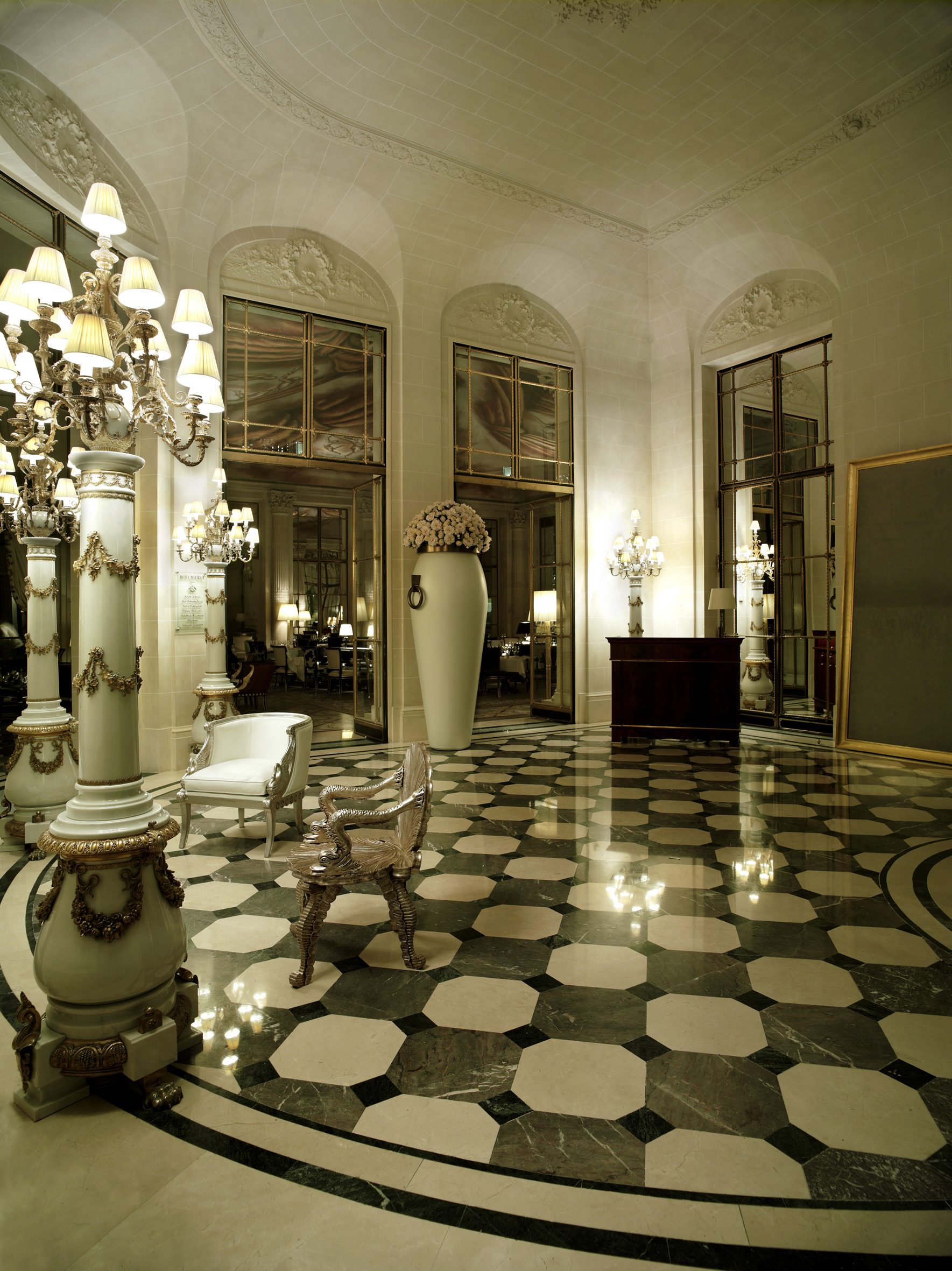
L'accueil (credit Peter Hebeisen)
Under the direction of Jean-Loup Roubert, Architecte en Chef des Bâtiments Civils et Palais Nationaux, 1er Grand Prix de Rome, Architecte en Chef du Grand Palais et du parlement de Bretagne à Rennes, and Architecte Nicolas Papamiltiadès, two work campaigns have refurbished the Mont-Thabor and Castiglione wings, as well as the central body opening onto rue de Rivoli.
From the succession of sumptuous salons on the first floor to the range of one hundred and sixty rooms and suites, the hotel has rediscovered the scale of its former volumes, the brilliance of its historic decor and the daylight that, from the Belle Epoque to the 1960s, illuminated the former salon des Quatre Saisons and its surroundings.
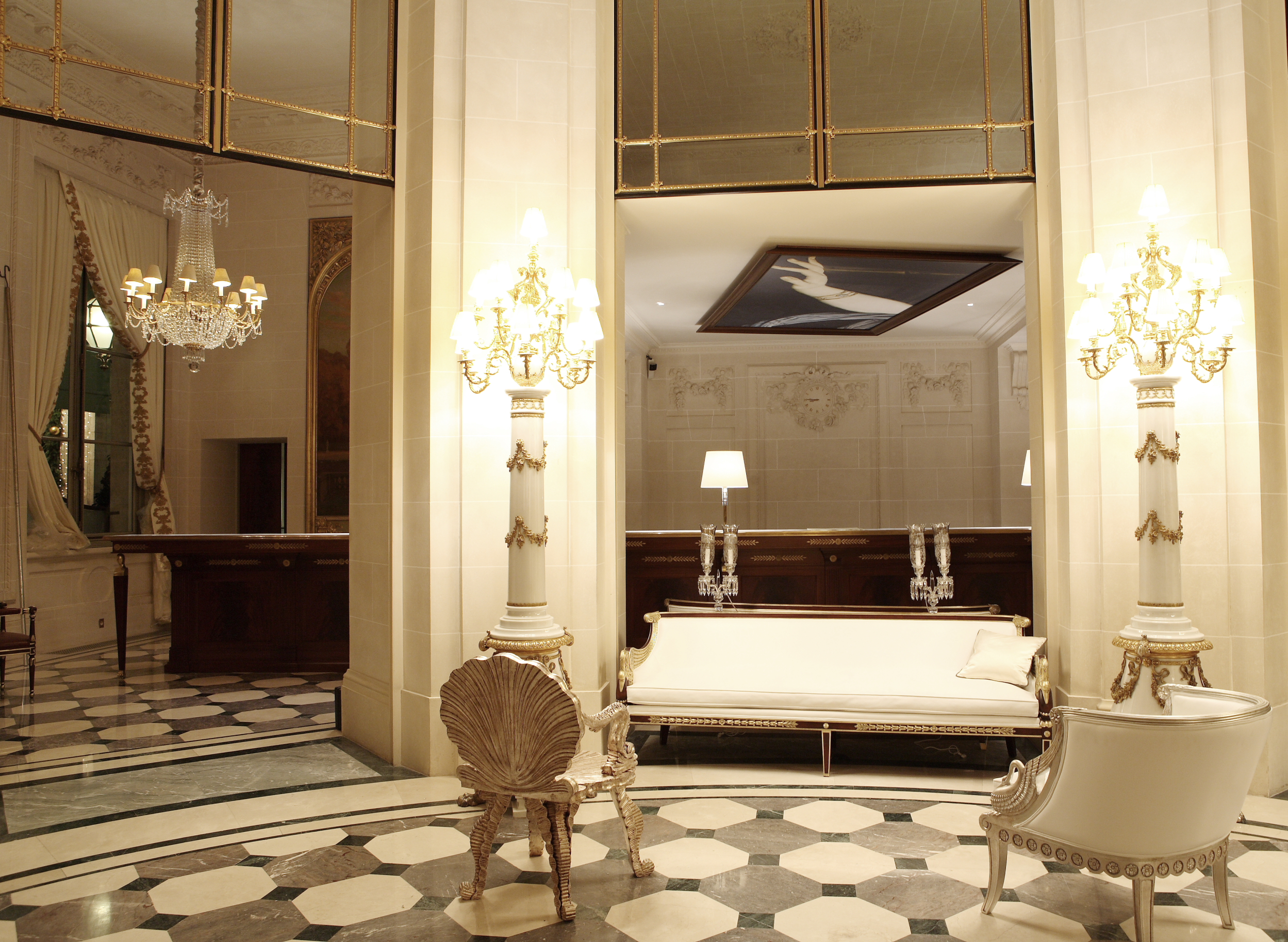
The renovation of the Hôtel Le Meurice not only rejuvenates the décor and adapts it to new technical standards, but is also striking for the gigantic scale of the work undertaken.
Visible from Place de la Concorde and Quai des Tuileries, the barracks installed on the roof of Le Meurice were an eloquent reminder of the scale of the project, which closed the hotel to the public for over a year.
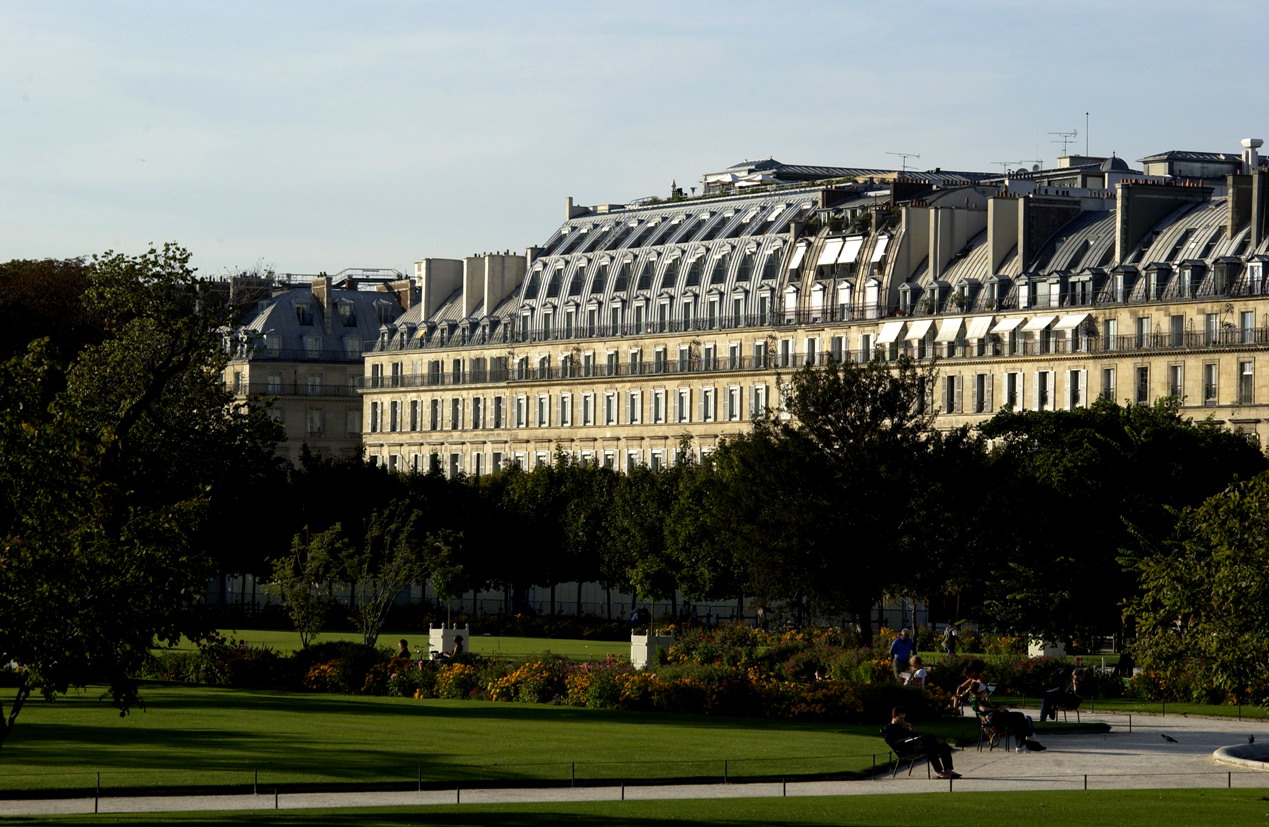
From the structural work – starting with the creation of a second basement for the technical infrastructure (heating, air conditioning, plumbing, electricity, wiring, etc.) – to the most meticulous finishing touches. Almost every trade was involved.
The scientific skills of leading-edge technicians have been matched by the unique know-how of the most qualified craftsmen.
On the first floor, the volumes were completely restructured. The aim was to restore the reception rooms to the size they were at the turn of the century, create new spaces on the Mont Thabor side – the Tuileries and Jeu de Paume rooms – with direct access, and make the most of natural light. The 18th-century decor, created in the 1900s, has been restored to its original splendor.
The hotel’s main entrance, previously located on rue du Mont Thabor, was moved to rue de Rivoli. The facade has been given a new sense of harmony by the creation of four large windows, balancing the four windows of the Le Meurice restaurant.
The vast lobby is adorned with painted panels from the former Salon Neptune, which can finally be admired after forty years. It houses the reception, concierge and cashier areas, not far from the elevators.
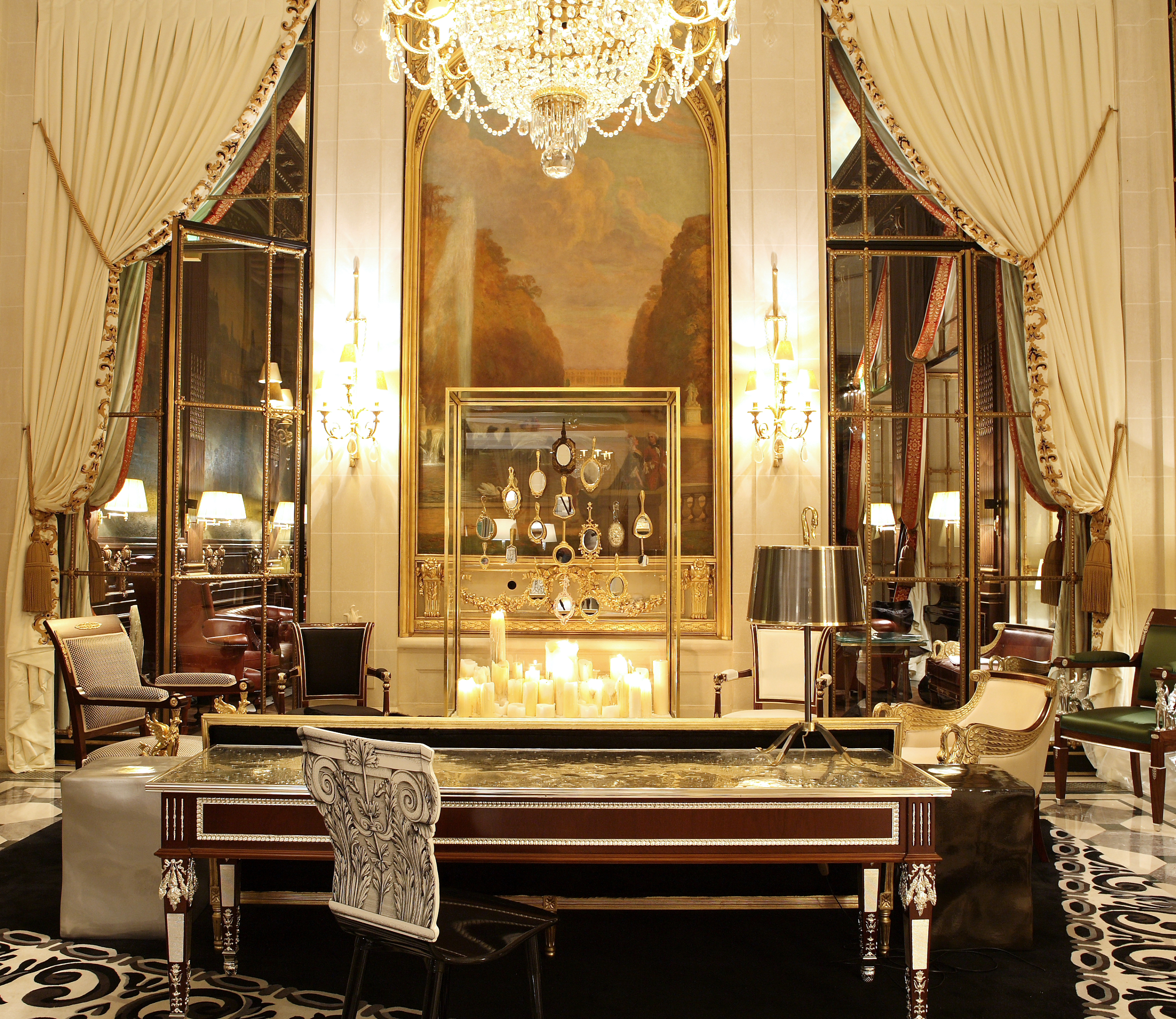
Lobby, c Francois Marechal
During the 1905-1907 renovation, architect Henri Nénot carried out a study on natural light inside the hotel: a vast wrought-iron skylight, with fish-scale motifs, was installed above the Quatre Saisons salon.
Over time, the metal sections supporting it had eroded under the effect of rust. In the inter-war period, it was replaced by glass blocks set in a concrete and metal frame, which significantly reduced daylight.
Later, in the 1960s, a false staff ceiling, with a painted celestial vault, completed the job of blocking out natural light. From both inside and out, the canopy was no longer visible.
The aim of the restoration was to restore it to its original state, with its scale-like motifs and friezes. The glass roof has now been covered with a monumental canvas painted by Ara Starck.
Adjacent to the Le Dali restaurant, Bar 228, once a reading room, has been restored to its former glory by the absorption of the Galerie de la Chasse, created in the 1960s. Lavalley’s three frescoes, depicting country feasts at the Château de Fontainebleau, were removed, cleaned and restored, then glued to a frame before being reinstalled. A painted ceiling depicting a night sky was executed by craftsmen specialized in decorative painting.
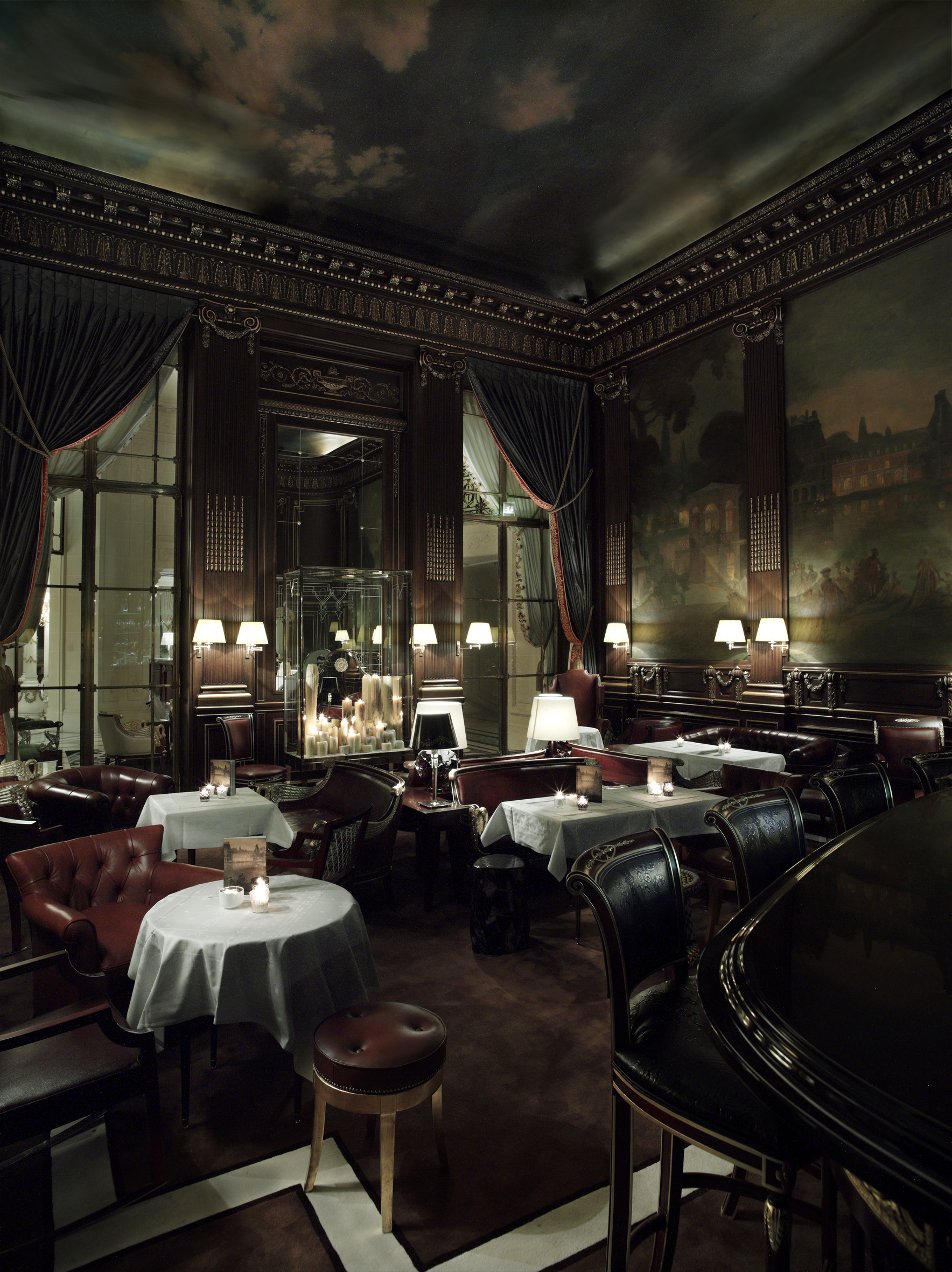
Le Bar 228 c-Peter-Hebeisen
In the Salon Pompadour, the sumptuous gold and wood panelling has been restored to its original hues. The mosaic, installed in 1907, was restored by master craftsmen from the Spilimbergo mosaic school in Friuli.
Inspired by the Salon de la Paix at the Château de Versailles, the restaurant’s décor, punctuated by marble pilasters and antique mirrors, has undergone a complete restoration, as has that of the Salon Pompadour: polishing of the marble, cleaning and refurbishment of the mosaics and crystal chandeliers, gilding of the bronzes, moldings and woodwork…
Cette publication est également disponible en :

