

“Artists dreaded having their paintings hung next to Turner’s and claimed that it was as detrimental as the neighborhood of an open window. For his works attracted the eye as soon as one entered a room.” George Dunlop Leslie, 1914
Anyone who loves Turner should rush to the multitude of “open windows” offered by the Grand Palais until May 24. Much more than a retrospective of the work of the one who can be qualified as the greatest British landscape painter, it is a true dialogue between his own genius and that of his illustrious ancestors but also contemporaries that is proposed to us.
Wilson, Ducros, Girtin, Piranesi, Veronese, Poussin, Titian, Bertin, Gainsborough, Rubens, Watteau, Canaletto, Constable, among others, are summoned here.
But it is with Claude Lorrain, the adored rival, the Pygmalion to be surpassed, that Turner will nourish throughout his career his most prolific and fruitful exchange.
Nearly one hundred paintings and graphic works coexist here, from the Louvre, the Prado, London, and major British and American collections, in a relevant scenography.
The tour consists of seven rooms and an evocation of the Tate Gallery in London:
A British apprenticeship,
The Academy, the Louvre and the temptation of grandeur,
The Salon of 1802, another way of classical landscape,
Northern resources,
The Cult of the Artist,
Turner and his contemporaries: the sublime inspiration,
Turner and his contemporaries: exhibitions and competitions,
Turner and the posterity of his painting.
When Turner, for example, is openly inspired by Claude Lorrain’s Landscape with Jacob, Laban and his daughters for his Appulia in search of Appulus (…), his absolute and subtle weapon appears in an obvious way: light. Incandescent or diffuse, it imposes itself in a unique treatment, almost mystical in its disturbing reality, throughout his work.
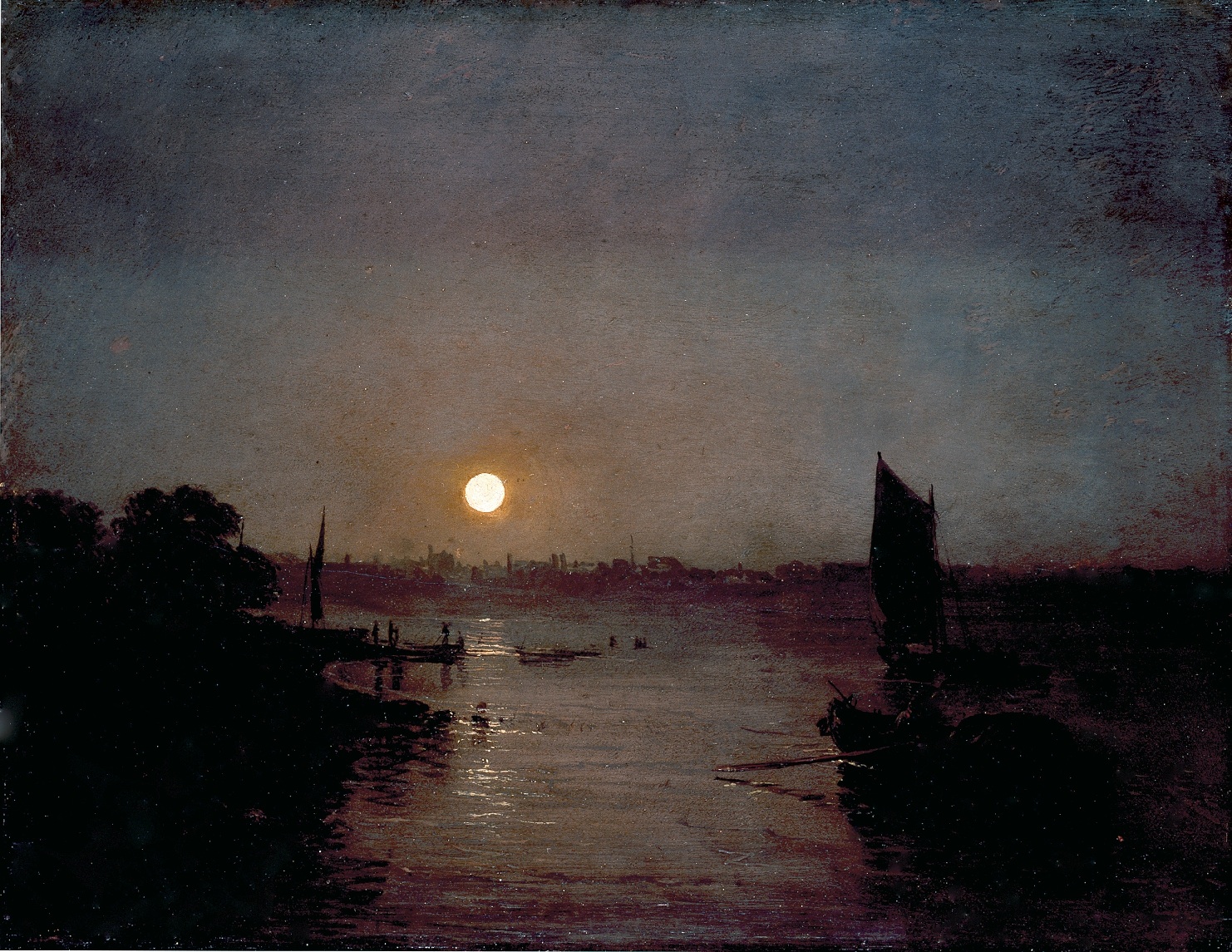
Thus, at the age of twenty-two, and on a very small format, Turner already seems to be blessed by the nocturnal star that has literally alighted on the canvas: a small circle of clear, pure, brilliant light in the middle of a marine, Moonlight, Study at Millbank announces that nature herself would bestow each of her luminous elements on the painter, as an offering to the one she has recognized as her noblest representative.
But it is at the end of his career, punctuated by references to multiple schools and styles (seascapes, fantastic scenes, genre scenes, history painting, academicism…), in his last decade of activity, that Turner truly becomes Turner.
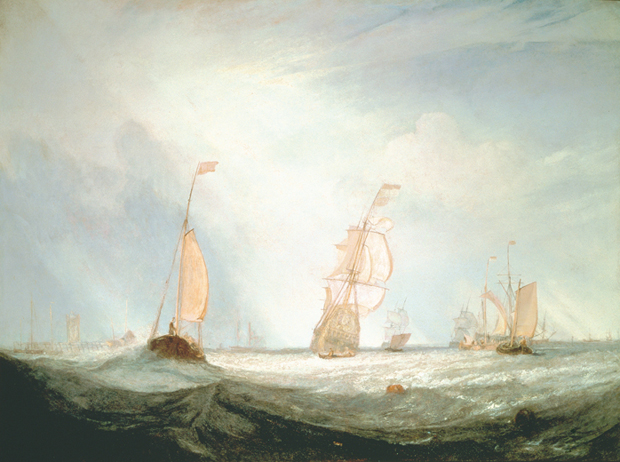
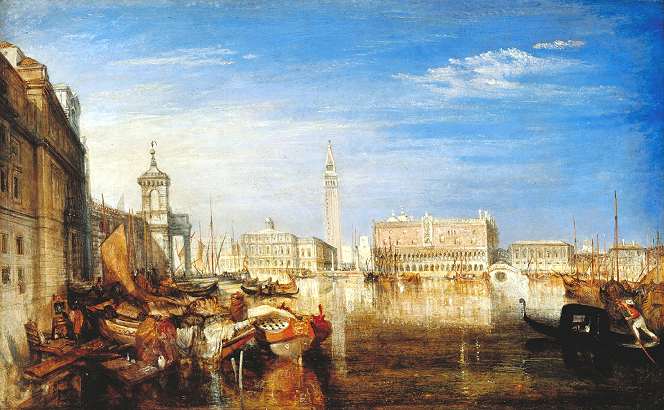
Freed from the specter of his rivals and mentors, he created a series of masterpieces (including Venice, View from the Porch of the Madonna della Salute, Regulus, Calais Beach at Low Tide (…)) resolutely personal and original in style, which some see as the inspiration for Impressionism, or even abstract painting.

One of his last paintings, Snowstorm, concludes in a swirling apotheosis, both in its subject and its treatment, the sublime allegory of man struggling with creation that was the life of this visionary that light had chosen as his lover.
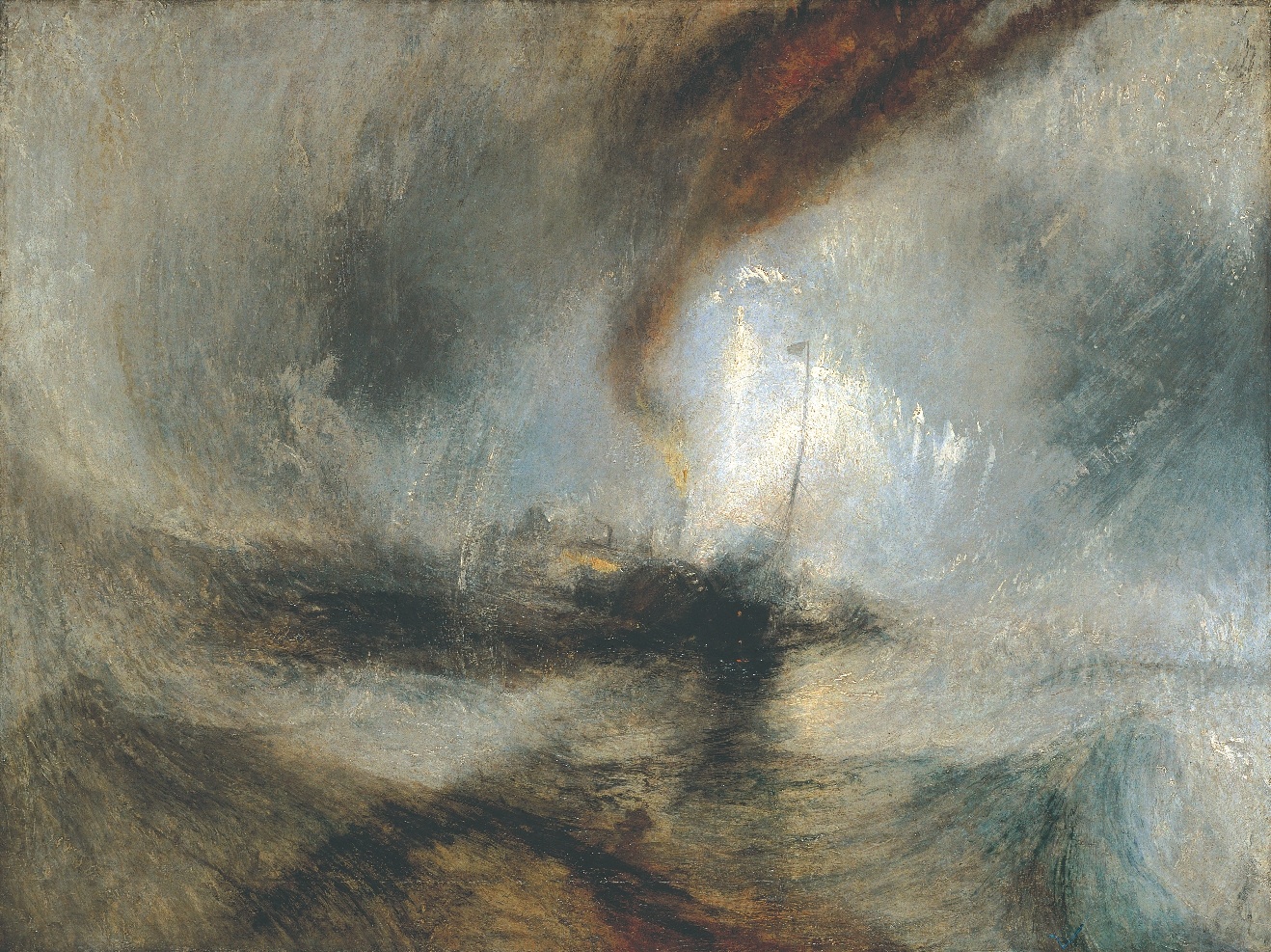
“For this Turner is gold in fusion, with, in this gold, a dissolution of purple (…) For me it is a painting that looks like it was done by a Rembrandt born in India.” Edmond De Goncourt, 1891
Turner and his painters
National Galleries of the Grand Palais
Until May 24, 2010
Admission 11 euros, reduced rate 8 euros.
www. rmn. en
Camille SALMON/ [email protected]
Cette publication est également disponible en :

