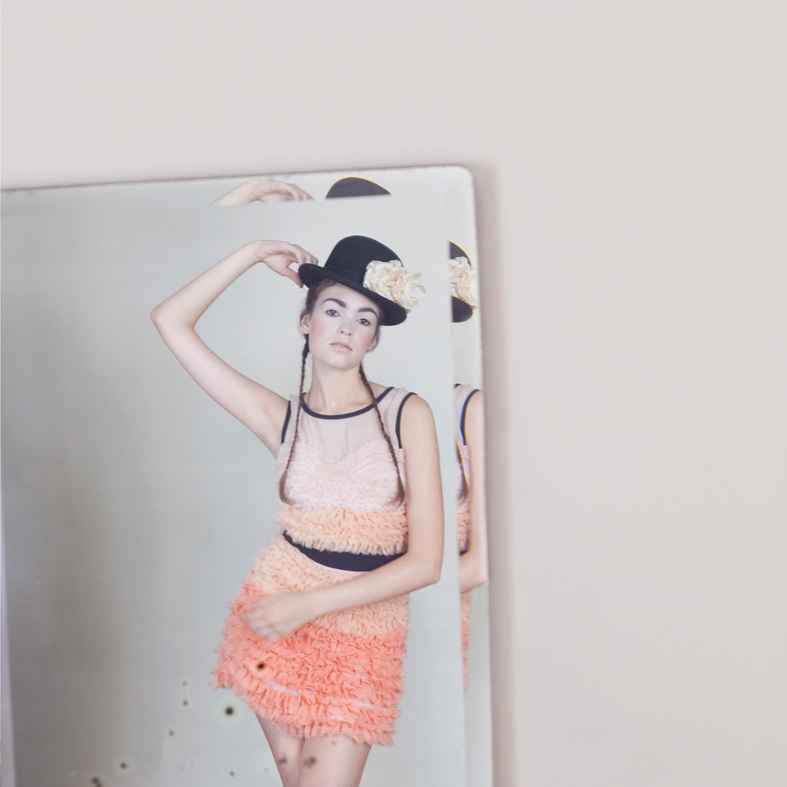

In 2001, the designer Kavita Parmar, who returned from her native India with fabrics and ideas, created Raasta (the path in Hindi). Raasta is not just another brand on the fashion market, it is above all a philosophy of life. Colorful, cheerful, different from what is usually found in Madrid stores, the collections are a sensation. Kavita continues its (good) momentum by proposing, from 2005, a more dressed line and mainly made of dresses: Suzie Wong. The year 2009 is the year of the opening, in Madrid, from “Raasta the Seed, first boutique of the brand with, as a bonus, a design studio and showroom just above. It is also the launch of Raasta Moustache, a men’s line.
An adventure that undoubtedly still has a long way to go.
Meeting with Marina Casal, stylist, obviously very happy to be part of the Raasta team.
Marina, can you introduce us to the Raasta and Suzie Wong brands?
These are two very different brands. Raasta is a brand for a younger, more special audience. The clothes are bold. For me, it’s like a magical world. We invent a little story, a character, and from there, we design the whole collection. It’s like a microworld that changes every season. The atmosphere remains the same but there is always a new story. At Raasta, there are many more prints. We create them ourselves; they are very colorful. We focus a lot on the color scheme; it’s the first thing we choose, it’s the most important because it’s always very personal. Raasta is not a brand that lives alone, it is imbued with everything we like in the world at large (art, movies, other products); the collections are fed, as they are designed, by all sorts of things.
Suzie Wong is a much more exclusive brand. While Raasta is like a story that evolves little by little, Suzie Wong is more defined. There are almost only dresses, each one being treated as a jewel. There is great detail work, embroidery for example and a lot of delicacy, Raasta is treated more like a collection, one garment leading to the other. Suzie Wong’s pieces are individually designed, each belonging to a different world. Raasta is for everyday life, for all kinds of situations, Suzie for parties, for special occasions.
How many stylists are you? Have you all taken a fashion course?
We are a team of three stylists. We work closely with Kavita Parmar, the artistic director. Yes, we studied in fashion schools in Madrid. I studied at the European Institute of Design, Andres and Laura in a public school.
How is the creation organized? Does each stylist bring their own ideas to a brainstorming session? Or does Kavita Parmar provide an angle of inspiration that everyone then feeds into in their own way?
The artistic director launches ideas, themes, comes with a painter’s book, fabrics or tells us about a movie that has marked her. But everyone contributes, each one bringing elements from their personal life, their travels, their home, what they see on the street. We do a brainstorming which is then constantly deepened, fed with new things. When we go to an exhibition, we bring back postcards or a book, for example. We make the theme evolve little by little rather than freezing it right away.
Once the spirit of the collection is chosen, does everyone focus on a specific activity?
Since there are only a few of us and there are a lot of things to do, we help each other, we work a lot as a team. But for example, for my part, I am more concerned with printed matter. Another person is in charge of the shapes and silhouettes. So there are things that are more specific to each of us, but in general we work together.
How do you create coherence between the different Suzie Wong pieces, conceived independently of each other?
Each garment is treated very differently, but at the beginning we still choose a theme, or at least a color scheme for the whole collection. One piece may inspire another but then there is always a new idea that leads to something else. Raasta is more linear.
Where is the production based?
We work with several factories, including some in India. They make the embroidery by hand. We spend 2 months a year there, one for each collection. We design all the embroideries, the prints and we make many tests until we are satisfied. Then we go to Portugal, we choose the fabrics, we make tests of colors until we arrive at the shades which we like.
How do you perceive Madrid in terms of fashion? Are people receptive to fashion that is out of the ordinary?
In Madrid, the original fashion is in the street. Very often, Spanish brands do not take too many risks. They are rather classic. But the style of the people in the street is modern. Everyone in Madrid says that Raasta seems not to be a Spanish brand. There are many colors, the pieces are very worked; we are not used to that here. There are some more daring designers but people don’t support them, they don’t buy. In Spain, it is quite complicated. Often people are more interested in what comes from elsewhere than in what they have next door.
In which other countries is the brand present?
It is distributed in 19 countries. In the United States, in Ireland, in Northern Europe, in Italy, in the Arab countries, in Japan. It’s going well, we continue to grow little by little. It is in the United States that the brand is most successful: in New York, Los Angeles and Chicago in particular.
Who are Raasta and Suzie Wong’s clients?
Whoever wears Raasta clothes is someone who doesn’t want to stay in his corner, who has an open mind, who is not afraid to try new things, even if it is very long, very short or very wide. Suzie Wong does not attract one particular type of woman, rather, the clients are different women looking for an outfit for a special occasion.
Finally, can you tell us a few words about Raasta’s spring/summer 2010 collection?
The collection is inspired by the circus. Normally we don’t base our work on something so concrete. But this time, for the summer, we were attracted by something fun, cheerful. We have collected books and images related to all types of circuses, not the one that automatically comes to mind; nomadic circuses, which go from village to village in their caravan.
www.raastatheseed.com
www.raasta.com.es
Rasta the Seed
Callejon de Jorge Juan, 12
Madrid
Points of sale in France:
Pearl, 30 rue Gustave Courbet, 75016 Paris
Bulle de Prune, 5 rue Chavanne, 69001 Lyon
Interview by Isabelle Huber
Thanks to Raquel Pérez Rousselot
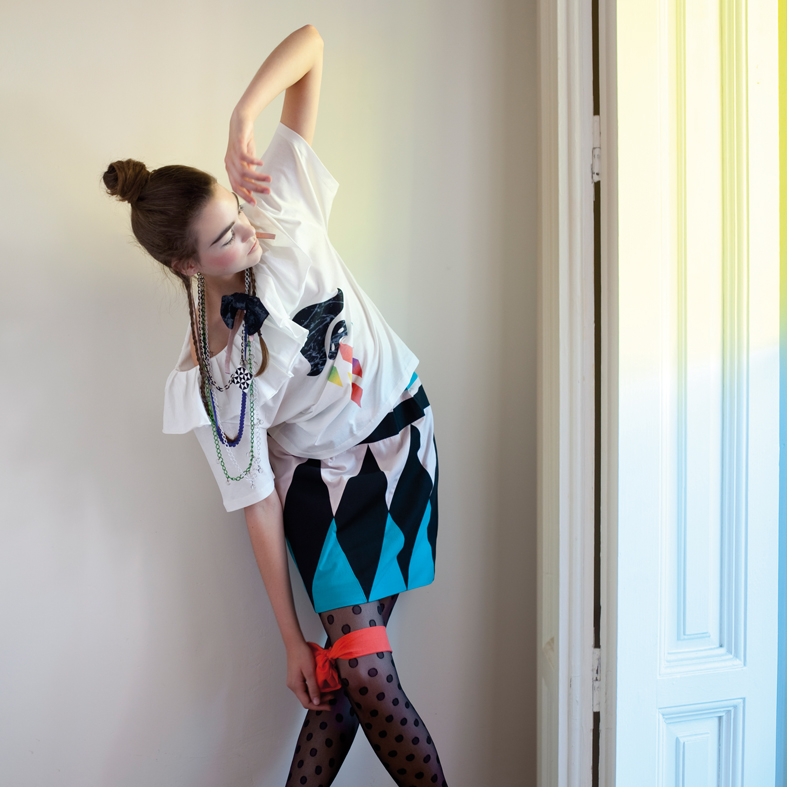
Raasta. Collection printemps/été 2010
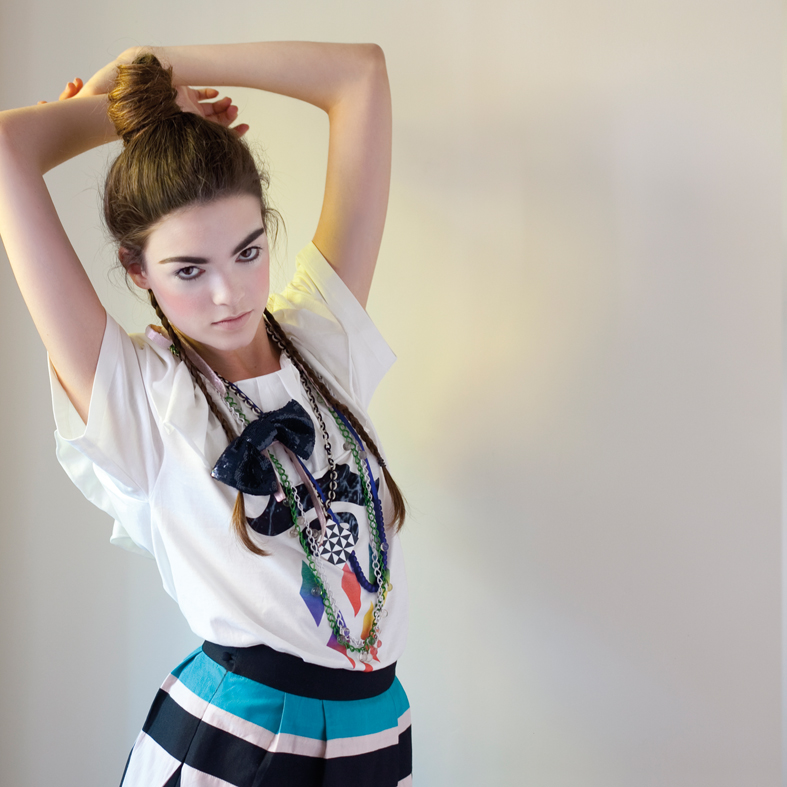
Raasta. Collection printemps/été 2010
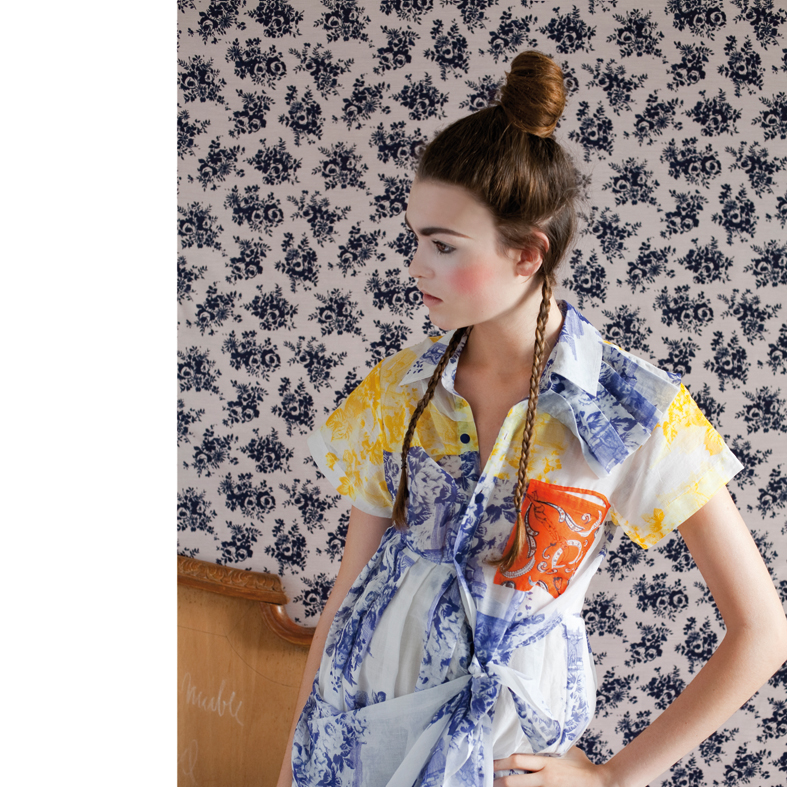
Raasta. Collection printemps/été 2010
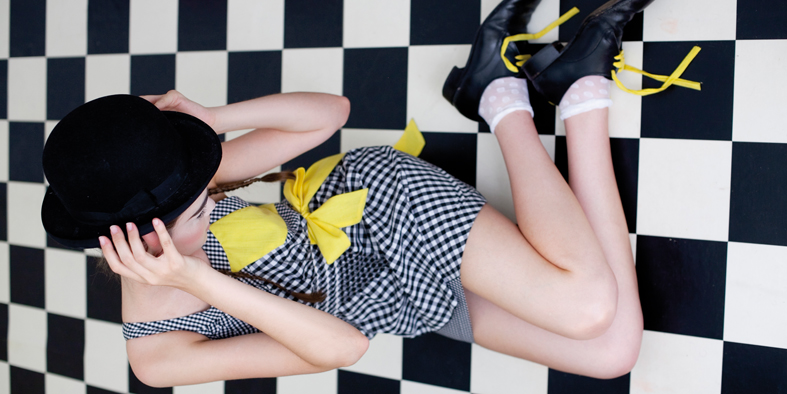
Raasta. Collection printemps/été 2010.
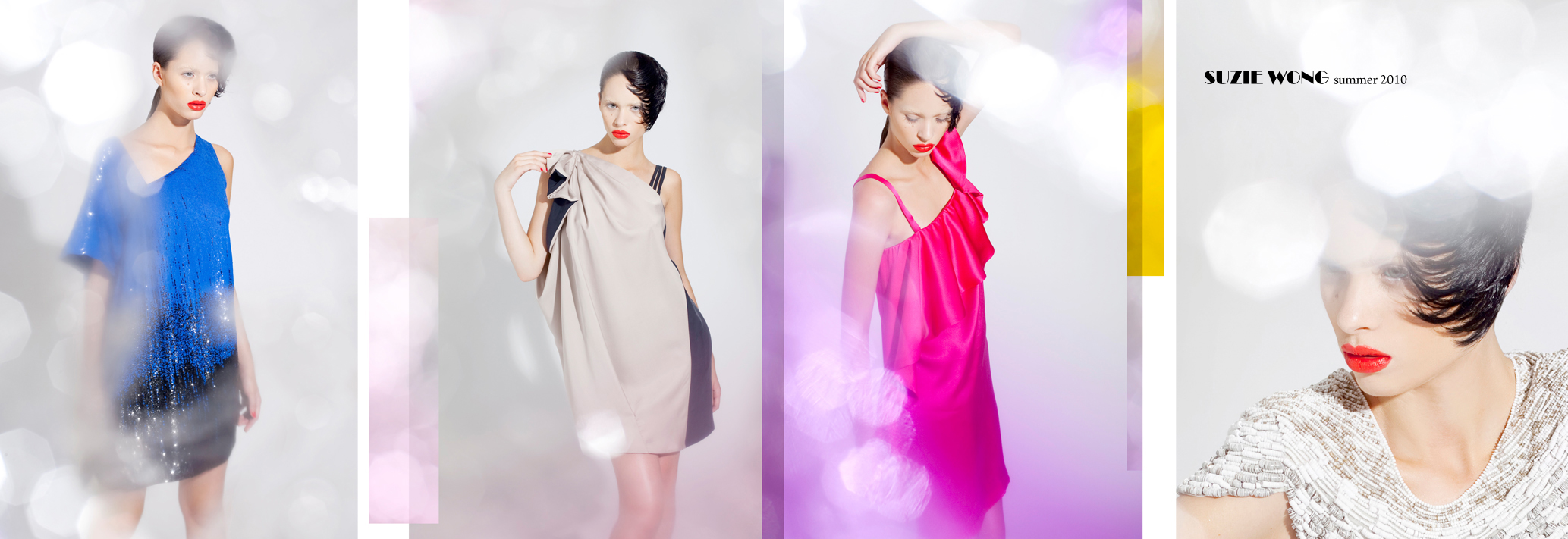
Suzie Wong. Collection printemps/été 2010

Suzie Wong. Collection printemps/été 2010
Cette publication est également disponible en :