

« I fled Japan because I was dead. I fled to France to escape my grief. One day, when I was three, my mother threw me out of the house. I left the house, taking a box with all my treasures. I took refuge in a public garden. The police found me there the next day. Since then, I’ve always felt like a nomad, a wanderer, a fugitive… » Kimiko Yoshida
There are discoveries that make a lasting impression, and artist Kimiko Yoshida is one of them. Until October 31, 2010, the Maison Européenne de la Photographie is showing a retrospective of the Japanese artist’s work, aptly entitled« Là où je ne suis pas« .
Kimiko Yoshida is a Japanese contemporary artist born in Tokyo in 1963. She studied photography in Japan and then in France, where she has lived and worked since 1995.
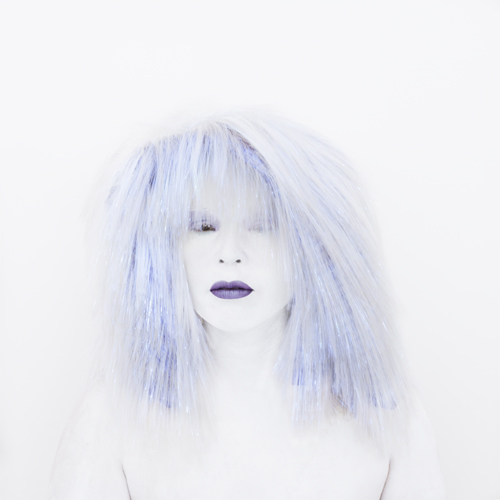
PEINTURE (WARHOL PAR LUI-MÊME). AUTOPORTRAIT, 2010 COURTESY PACO RABANNE
In the dark corridors of the MEP basement, his quasi-monochrome self-portraits are striking for their accuracy and constant mastery of light. His famous signature square formats are unsettling in their beauty and power of color. But beyond a purely aesthetic discourse, these shots speak of her and her feminine sensibility, of her rebellions, as a tribute to oppressed women everywhere.
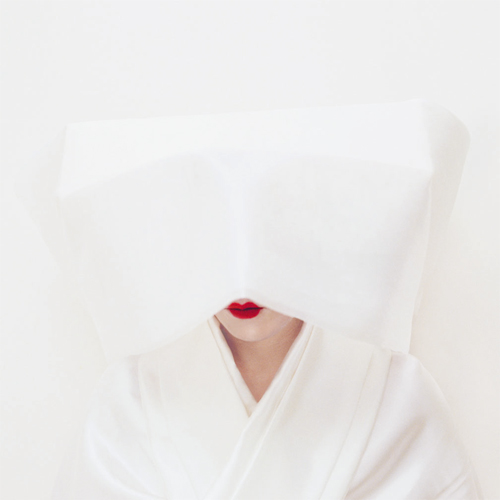
THE SHINTO BRIDE. AUTOPORTRAIT, 2002
Firstly, the photographer refreshes our memories with works from the« Mariées célibataires » series, conceived in 2000, the genesis of her style at Hassenblad. This series is rooted in the artist’s childhood, deeply marked by her mother’s arranged marriage and the humiliation she endured.
Kimiko Yoshida then created dozens of quasi-monochrome self-portraits in an attempt to conjure up the virtual marriage of the « Single Bride », who is in turn a widow, a cosmonaut, a Chinese, a Manga or an Egyptian… ». Today, in a succession of undoubtedly conjuring figures, I embody a paradoxical bride, intangible and single, with identities that are simultaneously dramatic, fictitious, subtle, parodic and contradictory ». A tribute to women whose freedom of choice is denied and who are caught in the bondage of arranged marriage, the artist embodies a disembodied bride, symbolic in all the strength of her condition, where Woman ultimately disappears.
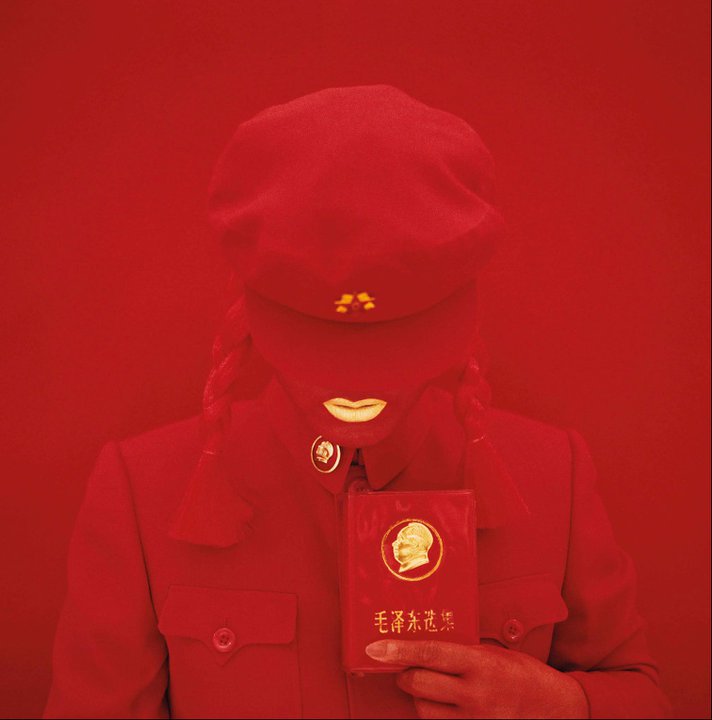
La Mariée Mao (garde rouge rouge), autoportrait, 2009 © Kimiko Yoshida
This impression of self-effacement is reinforced by the monochrome. Every detail is carefully thought out, perfectly integrated into these « tableaux » where Kimiko Yoshida both hides and reveals herself. Skin is blurred with color until it melts into the background and soon becomes one with it. Boundaries disappear, and the accessory becomes the most important element in the work.
The human being has disappeared, becoming in turn an accessory: « This search for monochrome is a reflection on the successive instants of identity, a work on the erasure of myself in the resurgence of the image of me. Monochrome delivers a chromatic infinity that is a temporal infinity ».
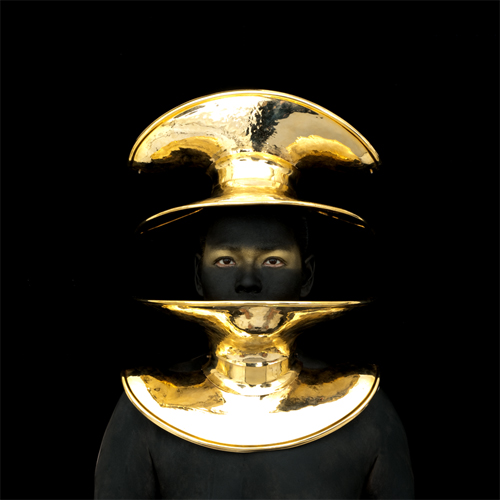
PEINTURE (WARHOL PAR LUI-MÊME). AUTOPORTRAIT, 2010 COURTESY PACO RABANNE
Kimiko Yoshida’s art is all about the paradox of disappearance, inviting us to take part in a veritable ritual of self-effacement, a multiplicity of reflections linked to identification, transformation, uniqueness and universality, the better to denounce that which revolts her. : « This paradoxical representation of a figure that tends to disappear, vanish or melt into monochrome aims at an impossibility, an impotence, a precariousness. It is this effect of incompleteness that rejects the ultimate meaning of the image into a beyond of the image [… ] My art is not about identity, but about identification. The question is not: « Who am I? », but rather: « How many am I? These self-portraits are no longer portraits, but still lifes.
PEINTURE (WARHOL PAR LUI-MÊME). AUTOPORTRAIT, 2010 COURTESY PACO RABANNE
The second part of this retrospective also calls on a memory, but this time a cultural one, through a new series, tinged with his memories of art history, entitled Peintures. This symbolic transposition of old masters’ masterpieces into large-scale canvas prints focuses on the practice of détournement and the relationship between different cultures.
Kimiko Yoshida transforms everyday and fashion objects, masterpieces from the history of painting, her previous Brides and the practice of photography itself. A former fashion designer, she appropriates Paco Rabanne’s haute couture creations, transforming dresses, skirts, accessories, pants and shoes into Grand Siècle headdresses, antique finery and other historical costumes.
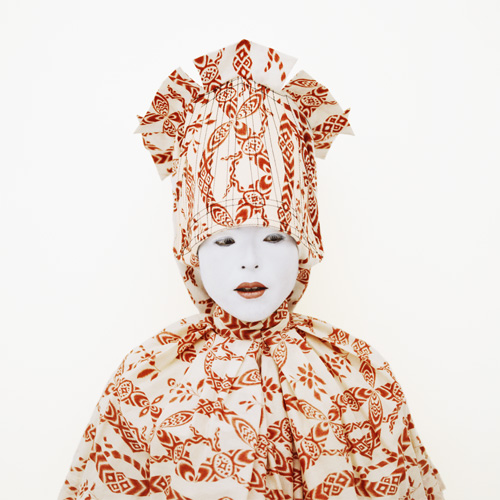
Peinture (La Jeune Fille souriant de Vermeer), autoportrait, 2007-2009 © Kimiko Yoshida
True to her quasi-monochrome self-portraits, in which the figure of the artist tends to disappear, the photographer summons the great masters of art history: Picasso, Matisse, Gauguin, Rembrandt, Rubens, Delacroix, Tiepolo, Watteau, Vermeer… But she is not content with a pale imitation, quite the contrary. Of the masterpieces from which it draws its inspiration, it retains only the most elementary detail, the one we arbitrarily remember when we think of the original work. And it is this reduction that conditions the partial identification of the self-portrait with a painting from the past, as in Vermeer’s Smiling Maiden.
In this series, the artist also revisits her own earlier self-portraits. Using everyday objects, she recreates an ancient headdress or mask from museum collections, behind which she had already staged her own disappearance.
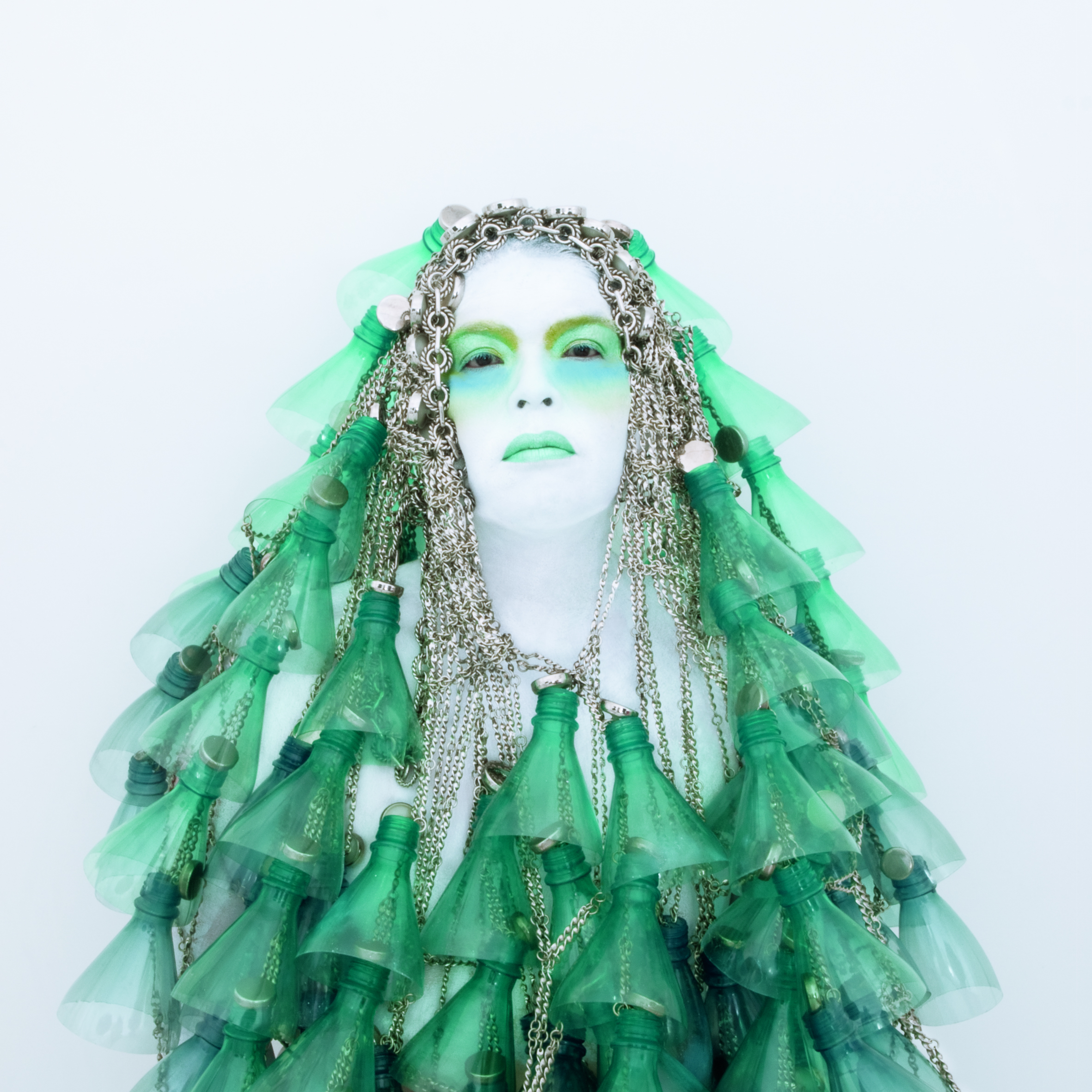
Peinture (Ophélie de Delacroix), autoportrait, 2010 © Kimiko Yoshida. Courtesy Paco Rabanne
It may seem strange, even paradoxical, to call a series of photographs Paintings, even if the subject turns out to be masterpieces of painting. But by using analog (Hasselblad) or digital (Olympus, for the Paco Rabanne series) originals to make digital prints on large canvases, the artist creates Paintings without paint, photographs on canvas.
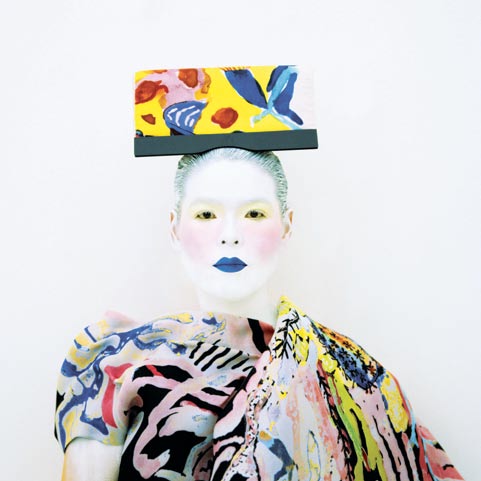
Peinture (Torero de Picasso), autoportrait, 2007-2009 © Kimiko Yoshida
Since leaving her native country, Kimiko Yoshida has been refining a distanced form of feminist protest through a deeply feminine, almost hypnotic body of work. One look and the fascination begins. Conditioned by the experience of transformation, her art develops a very contemporary reflection against contemporary clichés of seduction, against the voluntary servitude of women and against communitarian identities. And it is in this way that her message is both universal and deeply moving…
Photo credit: Kimiko Yoshida with the courtesy of Maison Européenne de la Photographie
European House of Photography
5 rue de Fourcy 75004 Paris
Open daily 11am-8pm except Mondays, Tuesdays and public holidays.
Price: 7 euros
www.mep-fr.org
Marie-Odile Radom