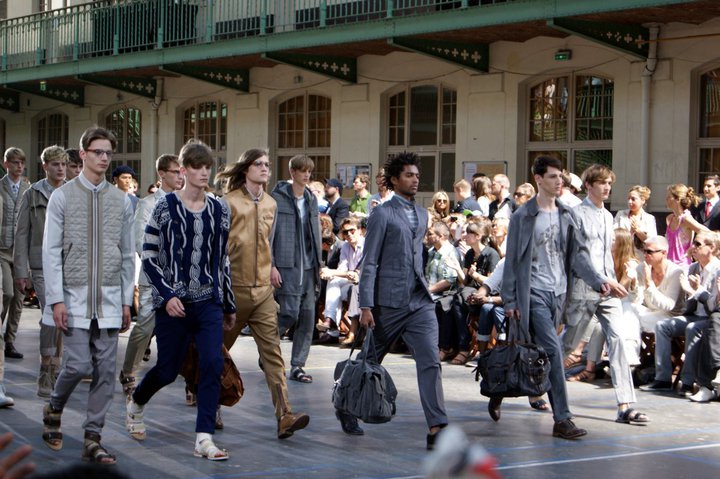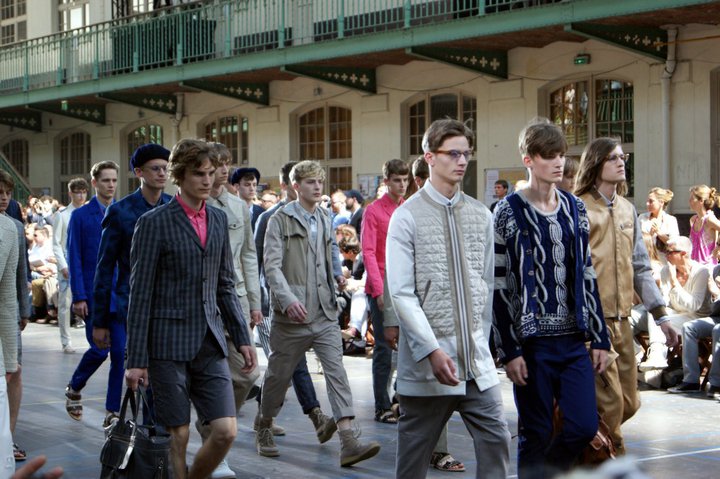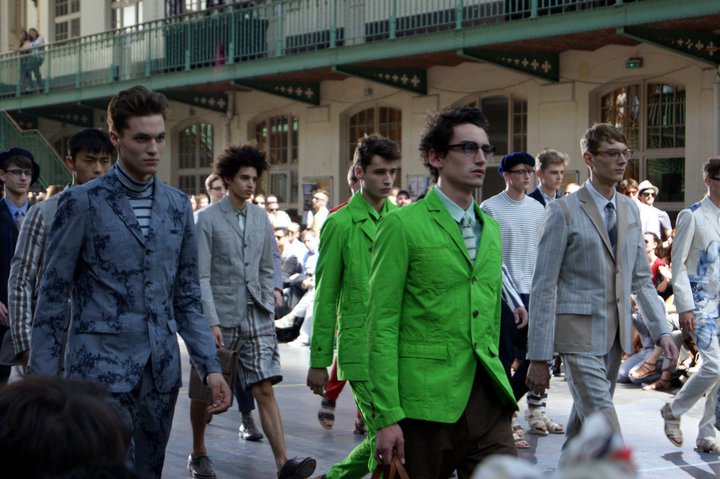
For the fortieth anniversary of the House of Kenzo, the artistic director Antonio Marras continues his tribute to the classic codes of the House, particularly with the flower print. The artistic director presents us with his Spring-Summer 2011 men’s collection, inspired by travel diaries between Paris and Japan, a man with multiple influences but deeply inhabited by the spirit of travel.
In the heat of a summer morning, the notes of a heady music are playing, revealing the first models of this new collection between dreamlike journey and time travel. Antonio Marras has chosen to start our journey across the oceans in an impressive score of blues in the courtyard of the Lycée Carnot, a mythical place that has hosted many of Kenzo’s fashion shows. The designer offers a very contemporary version of the sailor style, the sailor is reinvented in sweater, tee shirt. Horizontal and vertical stripes are mixed, made wide or thin, multiplying on jackets, shirts and pants and even dress some bags.
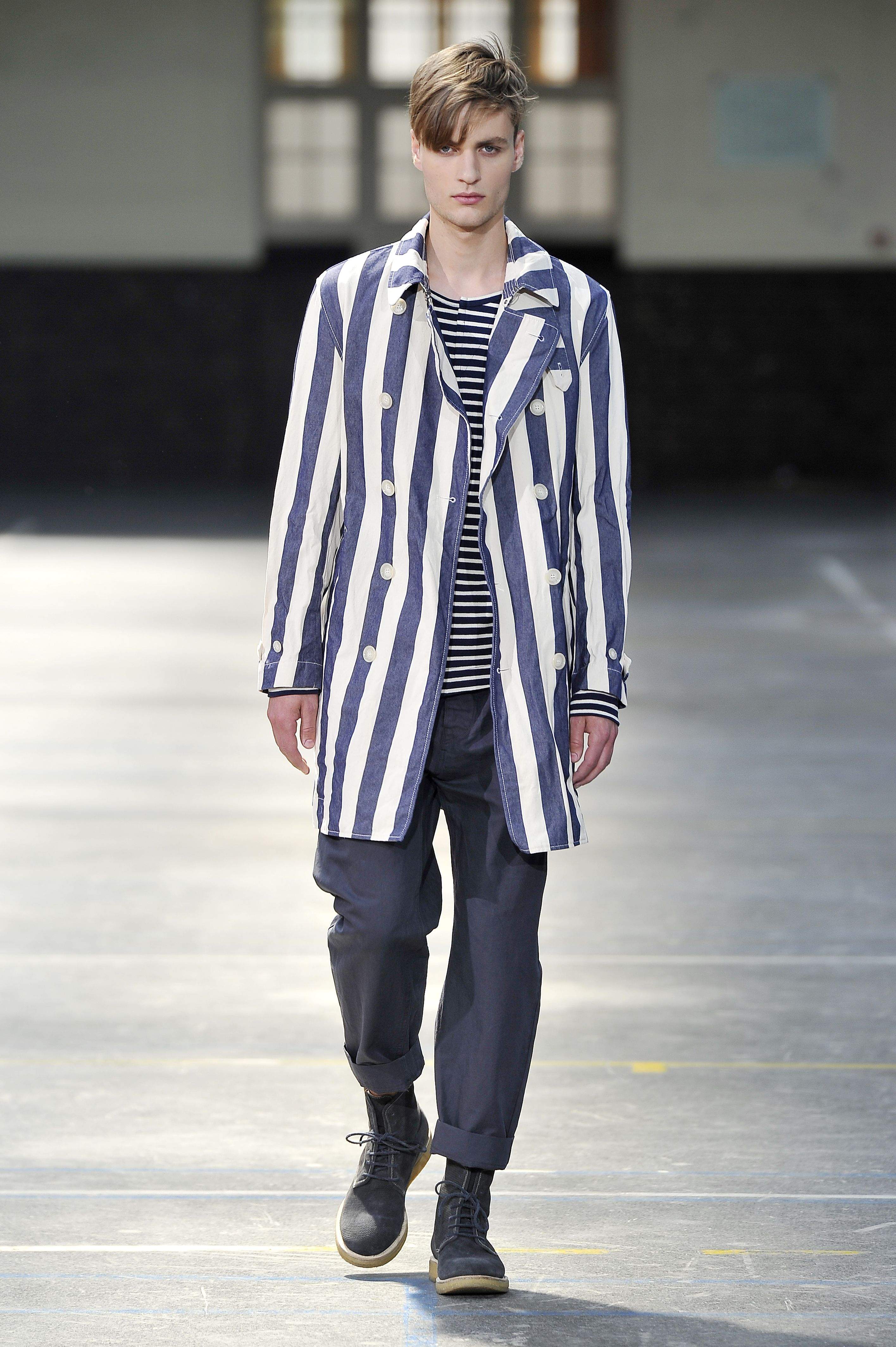
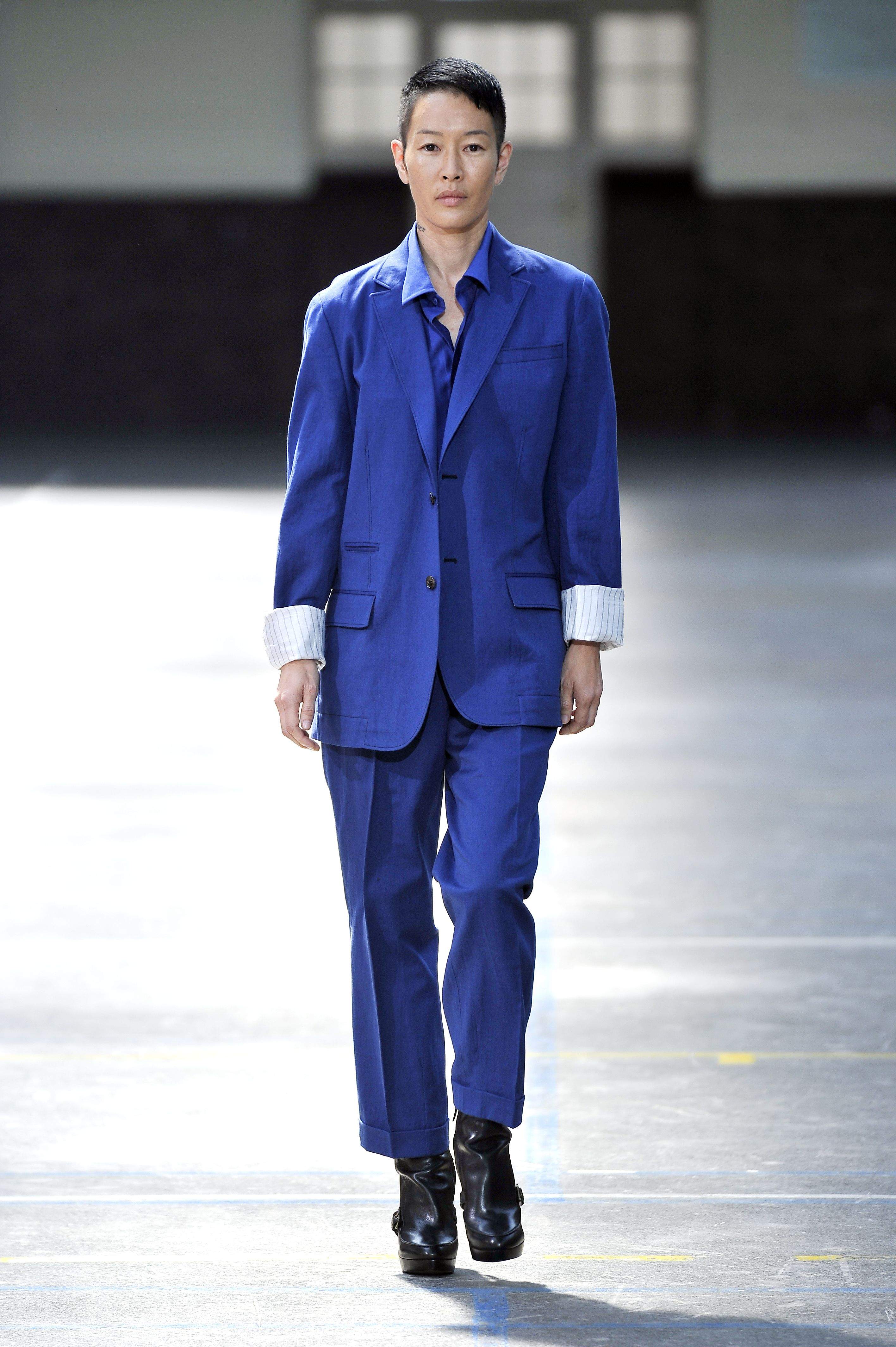
Navy blue, Klein blue and sky blue make up a first color palette for a multiple man for a return to the past. The silhouettes are inspired by that of a schoolboy wearing a beret, glasses, short pants and a schoolbag to move towards that of a worker in overalls becoming a suit. The white and blues combine smoothly while making infidelities through more colorful associations as with this intense red sublimated in costume. We find throughout this fashion show the codes of the brand (three-button jackets, natural materials, Kenzo tartan) but these codes are modernized. The designer does not hesitate to use innovative fiber blends that give a slightly crumpled look to the clothes but are so adventurous. Leather laminated with jersey, chintze cotton, linen, jeans and piece-dyed cotton, the naturalness takes over. The painted flower maxi printed reappears here on a jacket side or there on a leg of Bermuda shorts all in softness and subtlety. The suit is worn with flat sandals, Bermuda shorts make a big breakthrough to become a classic again.
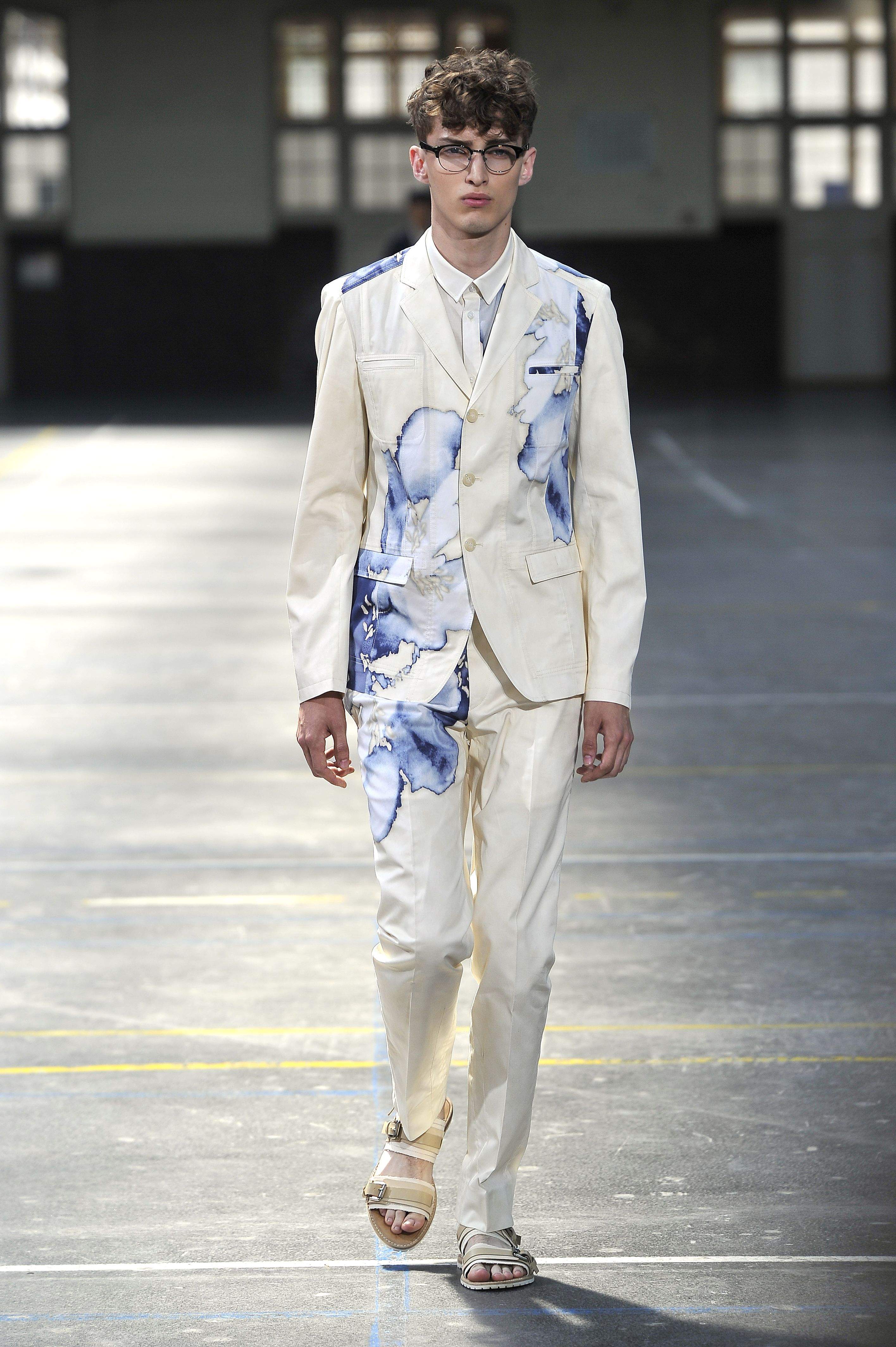
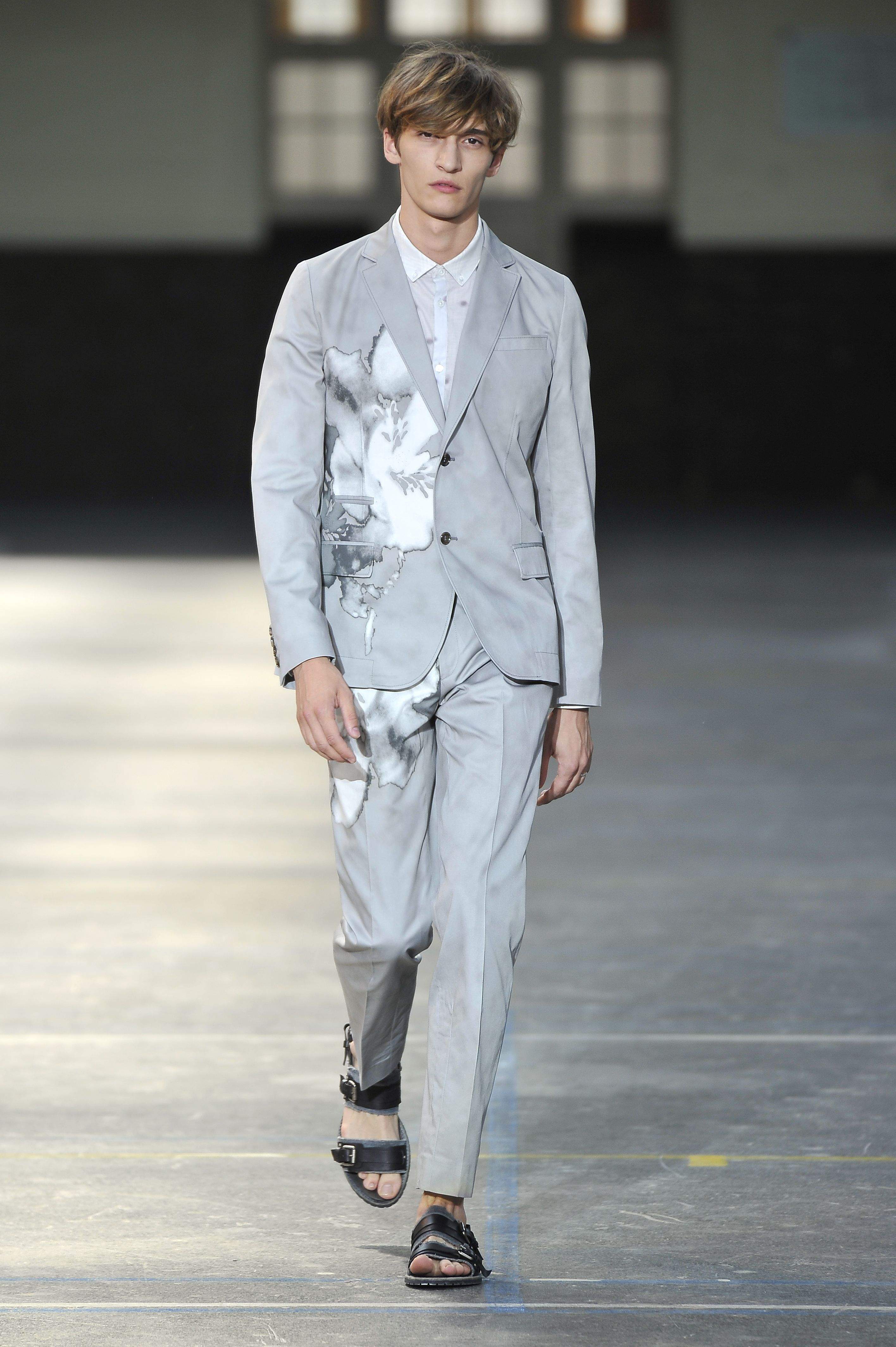 It is to the confines of the sandy desert that Antonio Marras chooses to take us next. Beige and camel rub shoulders with shades of taupe, sand, rope and ecru. Again, the designer does not hesitate to shake up his color code by associating them with an intense green for which he creates an unforgettable costume. The designer does not hesitate to use patchworks mixing washed and wadded materials. It also features an interesting knitting game with jacquard knitting and handmade crochet. The prints are painted like Japanese watercolors or repeat the tile as a constant leitmotif. The animal or landscape print appears in subtle touches.
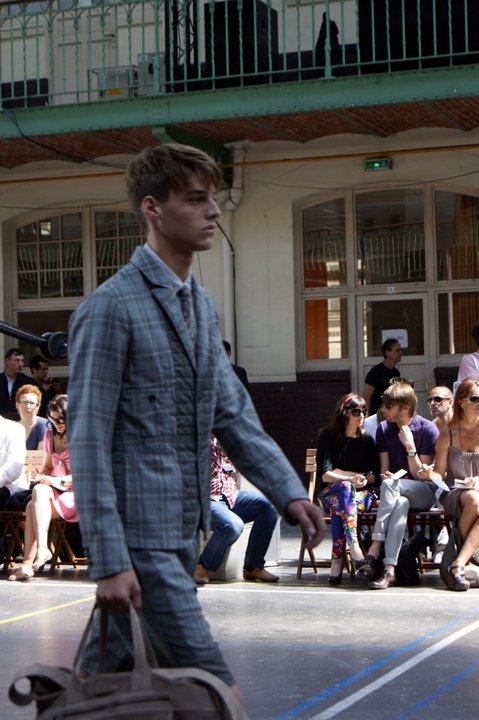
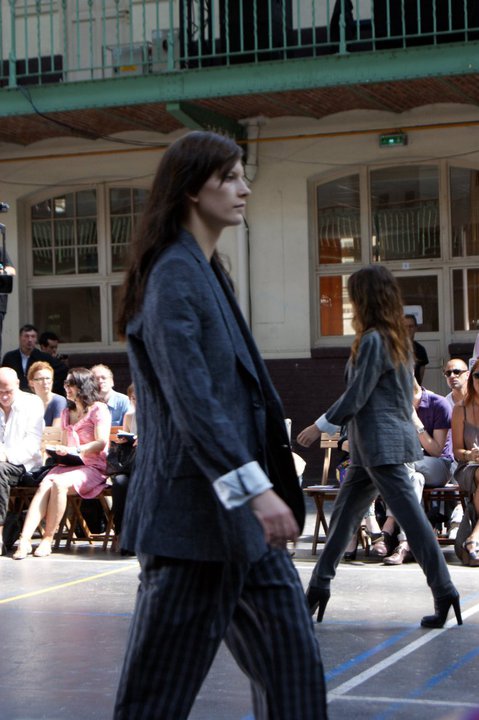
And finally, the Sardinian stylist chooses to end our journey in the city using asphalt gray, mouse gray and anthracite, which he combines this time with pink to soften the edges.
The Prince of Wales cotton contrasts with the printed mottled cotton, the checks are very present for a man of the cities who likes to be comfortable in his clothes but chic. Again, the universality of the models is shown through the choice of women for some costumes. The suit is more precise and is part of prints, Bermuda shorts is still present and adopts the tile. The shirts hide large tiger or landscape prints.
The designer also offers large bags, between travel bag and sports bag, in the spirit of chic adventurer conveyed in this collection. The hand luggage is practical but chic.
Antonio Marras continues to surprise us and reinvent the Kenzo man while proving that he has perfectly assimilated the House’s codes. The Sardinian designer even proposes an interesting combination of man and woman, some female models parading in costumes that they themselves have selected and that they feminize with great blows of heels.
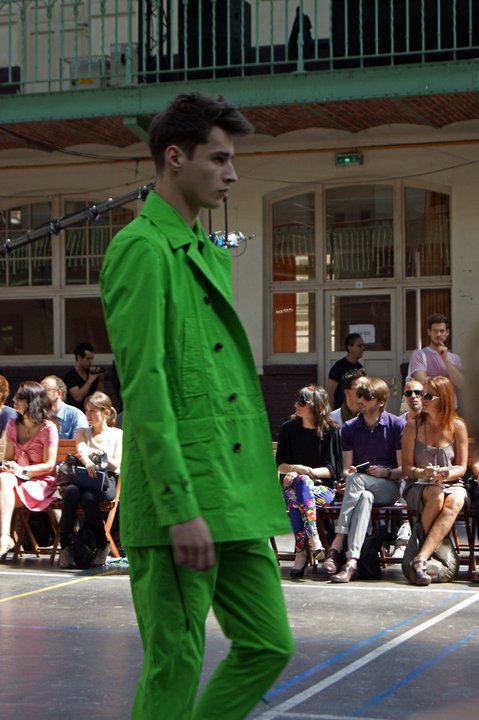 The Kenzo man remains a traveler, just like his creator and his illustrious predecessor. May this journey continue for a long time.
Marie-Odile Radom