

Bad pupil!
Audren
L’école des loisirs
September 2010
8,50 €
Tuesday, November 2, 2010, Paris
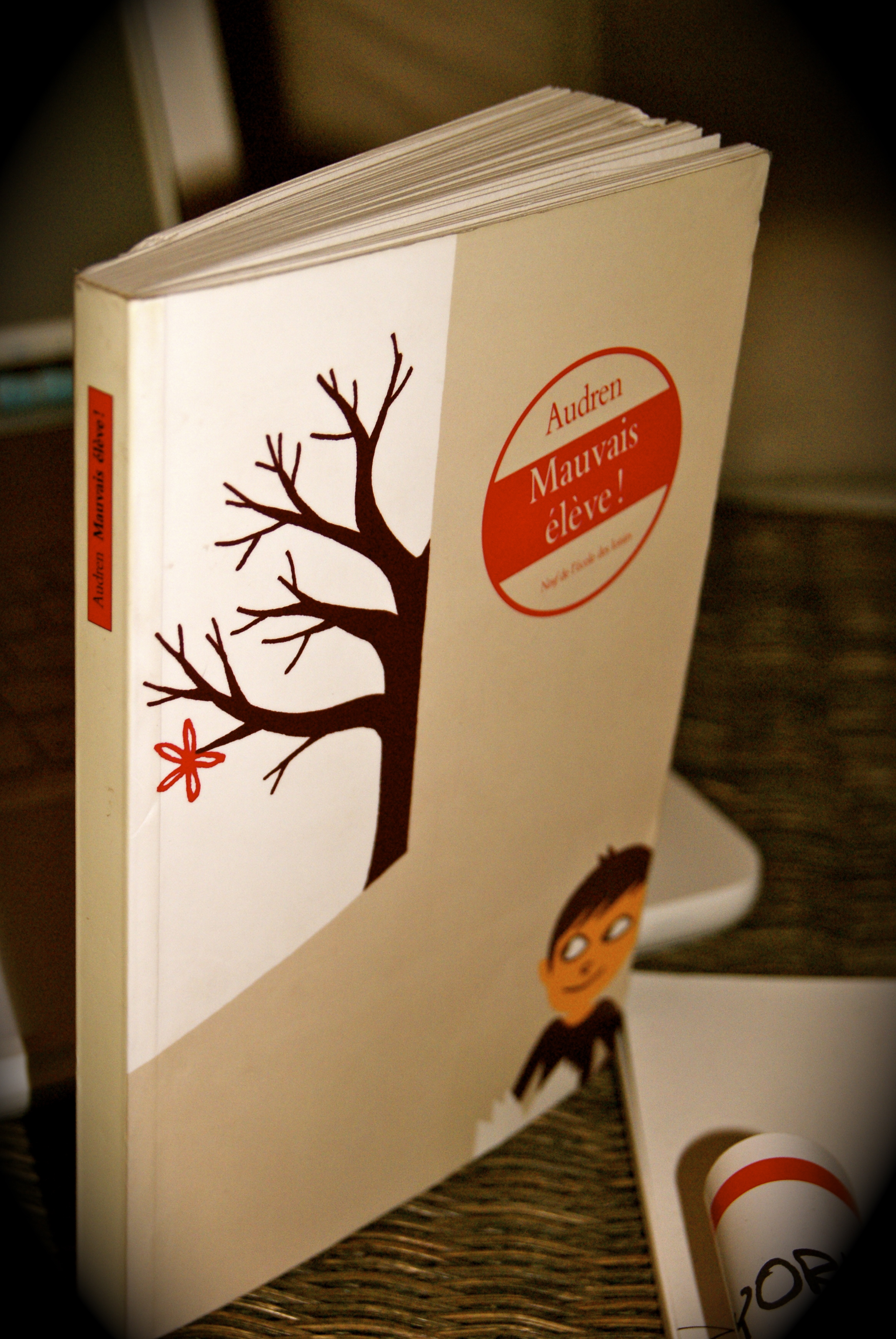
Crédit photo : EP
Best passage in the book/
« After recess, as planned, I met the school psychologist. She’d put on so much lipstick that her canines were covered in it. A real vampire!
- Do you want to measure my intelligence? I asked Draculette.
- No, no, we’d like to understand why you’re not succeeding in class. We want to help you.
- You don’t need to take any tests for that. I don’t like school. That’s all there is to it. You don’t have to look for the smallest thing. You, for example, there are many things you don’t like… for example… I don’t know… if you don’t like rap, you’re not going to force yourself to listen to it…
- But school is compulsory, Arthus, not rap!
- You have to go to school, but you don’t have to be good.
- It helps…
- To what?
- Preparing for your future. The future is important, you know.
- I hate the future tense.
- I’m talking about the future simple.
- If the future is simple, why are you complicating my life then? »
To sum up/
Artus is a bit like « Le cancre » from Jacques Prévert. « He says no with his head, But he says yes with his heart, He says yes to what he likes, He says no to the teacher… ». He doesn’t like school. What he does like is to contemplate the beautiful, and to have friends – often charismatic, colorful, older characters – who answer (them) the questions that nag at him (Monsieur Pétillon, the pastry chef; Sonia, the florist; Peter, the art collector…). For Artus, looking at beauty means, for example, turning a slice of bread (butter + jam) into a real work of art, or being ecstatic at the changing colors in the sky. Not to forget, Artus also loves musicals (and at the top of the list…), The Bloomsbury Girlwhich is showing in Paris…). At the tender age of 10, the little fellow poses existential and metaphysical questions to the world of adults, questions that are all too often left unanswered, in a « We’ll see about that later. That’s not the point… », invariably leading to incomprehension and a form of revolt. The 127-page book examines not only the dysfunctions of the education system, the parent/child relationship, the notion and experience of beauty, and above all those « important things in life ».
PS/A book to give to any budding striker.
Elisa Palmer
says no
says no